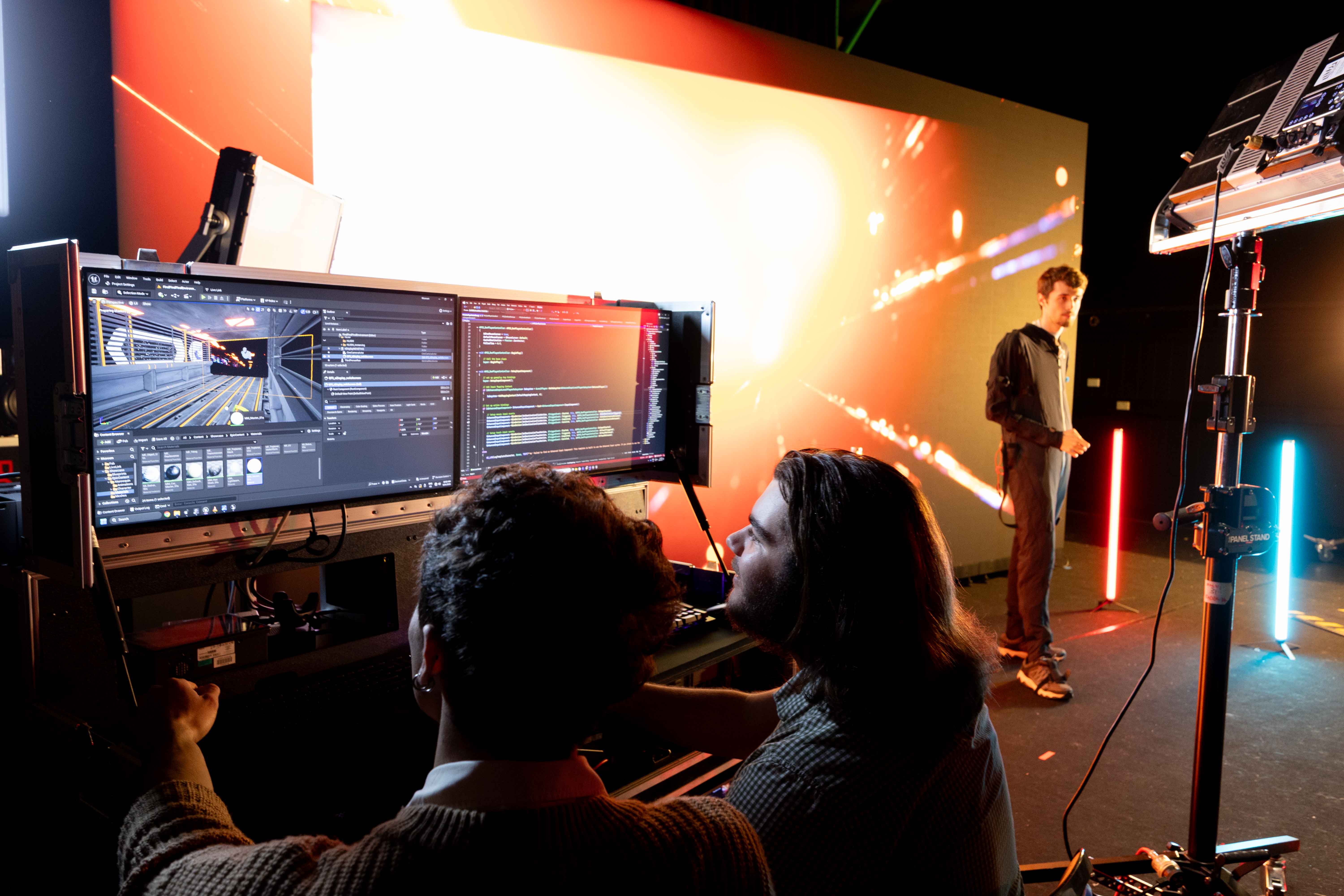
Combining technology with a hub of artists, researchers, students and industry partners
Mediated Realities Studio is a Creative Arts facility that brings together motion capture, sound recording, photogrammetry, volumetric video capture, holographic display, virtual production, and real-time creative systems to support practice-led research, teaching, and experimentation.
The Studio welcomes collaboration with artists, researchers, students, and industry partners interested in practice-led exploration across screen, performance, sound, spatial practice, and creative technologies.
The Studio provides a flexible environment for artists, researchers, and students to explore how contemporary experiences are constructed, mediated, and performed through creative technologies. Designed for cross-disciplinary collaboration, the Studio supports emerging creative practices while remaining adaptable to future developments.
Work in the Studio is typically developed through shared use of facilities and cross-disciplinary collaboration, supporting activity at different stages from early experimentation to research-led inquiry and industry engagement. If you are interested in developing a project or exploring collaboration, we would be pleased to hear from you.
Leadership
Mediated Realities Studio operates under academic leadership from Griffith Film School, overseen by Professor Chris Carter.
Capabilities
Motion Capture
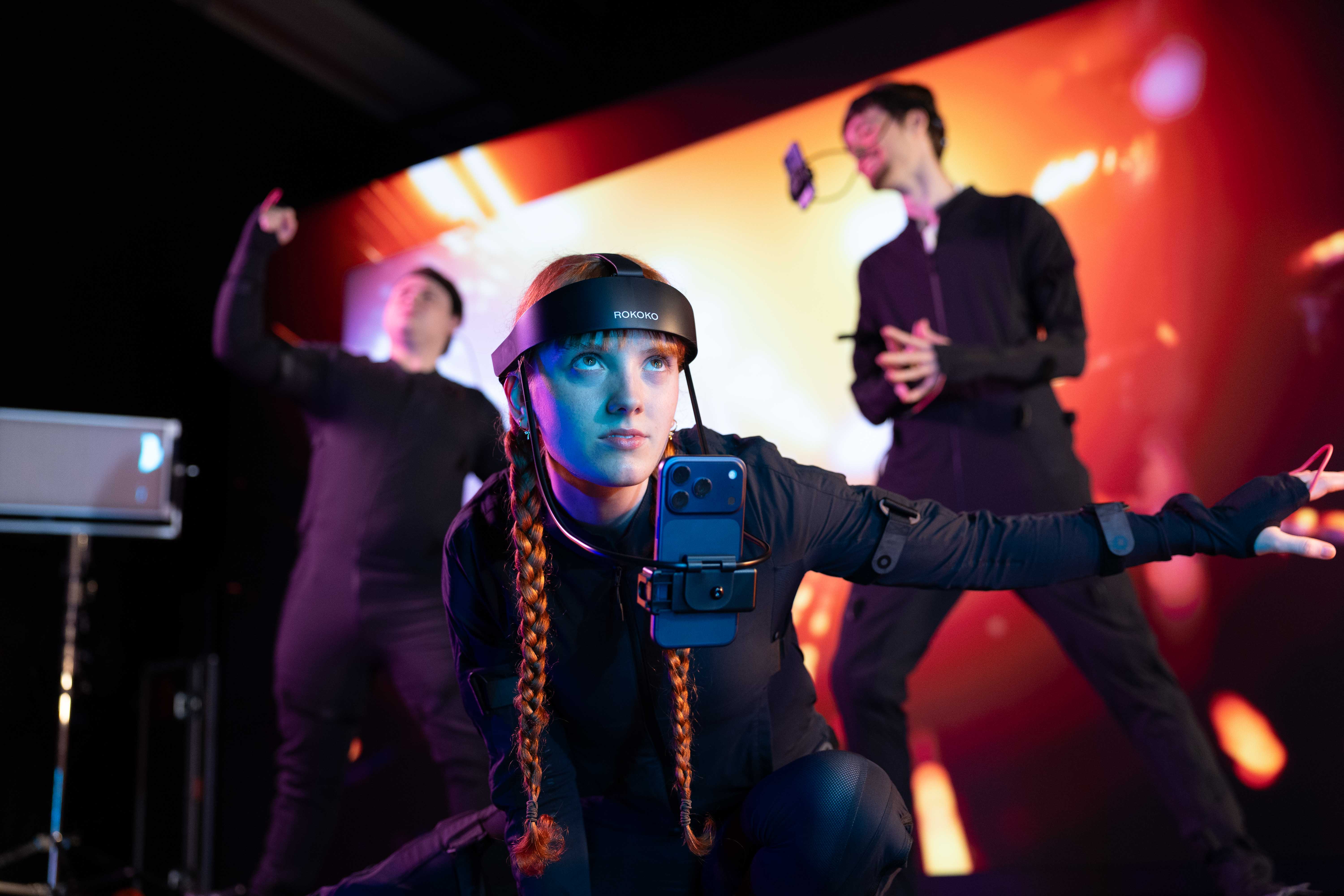
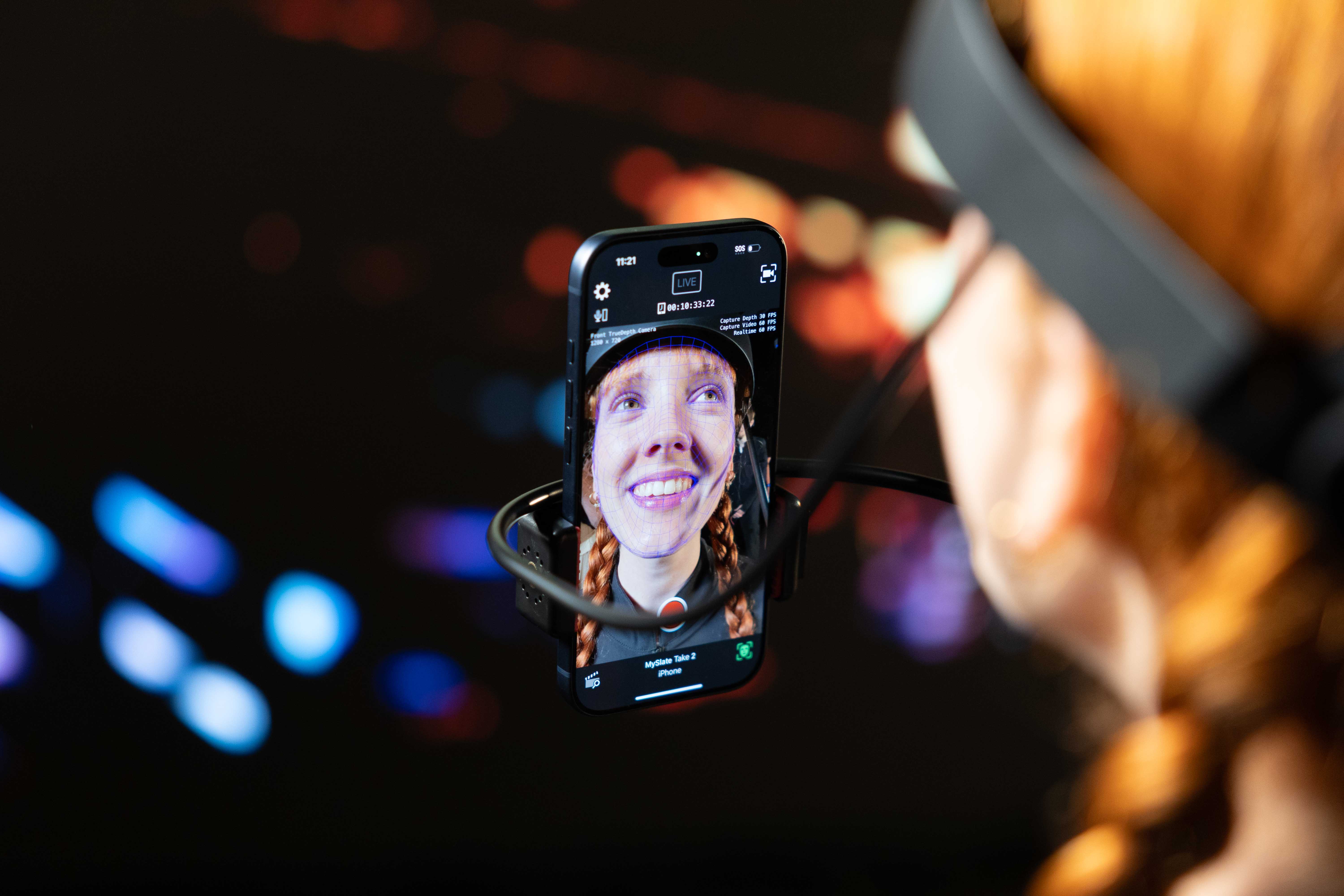
Motion capture, also described as performance capture, is a creative tool that allows artists to bring digital characters to life by recording real human movement and expression. Perfect for creative arts applications across film, animation, theatre, and game design, performers wear suits or markers while acting out scenes, enabling their physical gestures, facial expressions, and subtle nuances to be translated into digital form. The Mediated Realities Studio uses an array of infrared Vicon cameras, and also offers more portable solutions including the latest Rokoko inertial measurement unit technology (IMU). Complete with head-mounted facial tracking, our motion capture solutions support immersive storytelling and preserve authenticity and nuance of live performers.
Sound Recording and Spatial Audio
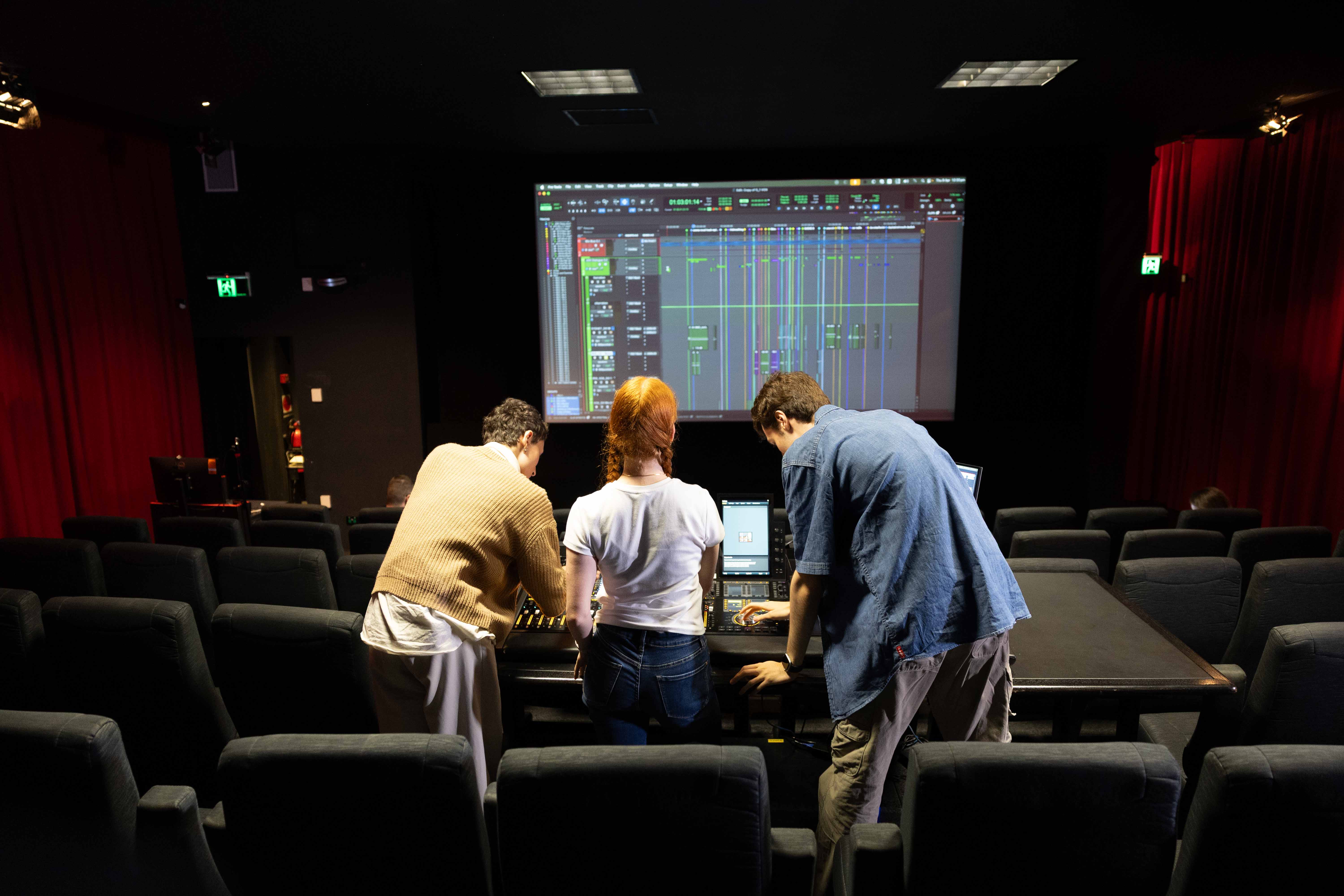
Spatial audio contributes to rich, immersive experiences across film, music, games, and other creative media - with a toolkit including ambisonic audio capture and processing alongside more traditional stereo and mono sources, the Mediated Realities Studio is ready to capture voices, instruments, and environmental sounds with clarity and detail, forming the foundation of a project’s audio landscape. Spatial audio workflows, including real-time VR/AR interactivity, allow the researchers to place sounds within a three-dimensional environment, allowing them to move around the listener and reflect how we naturally perceive sound in the real world. Combined with the School's audio post-production studios including the 7.1 surround sound cinema mixing facility, bring your project to life with professionally recorded and processed audio.
Virtual Production
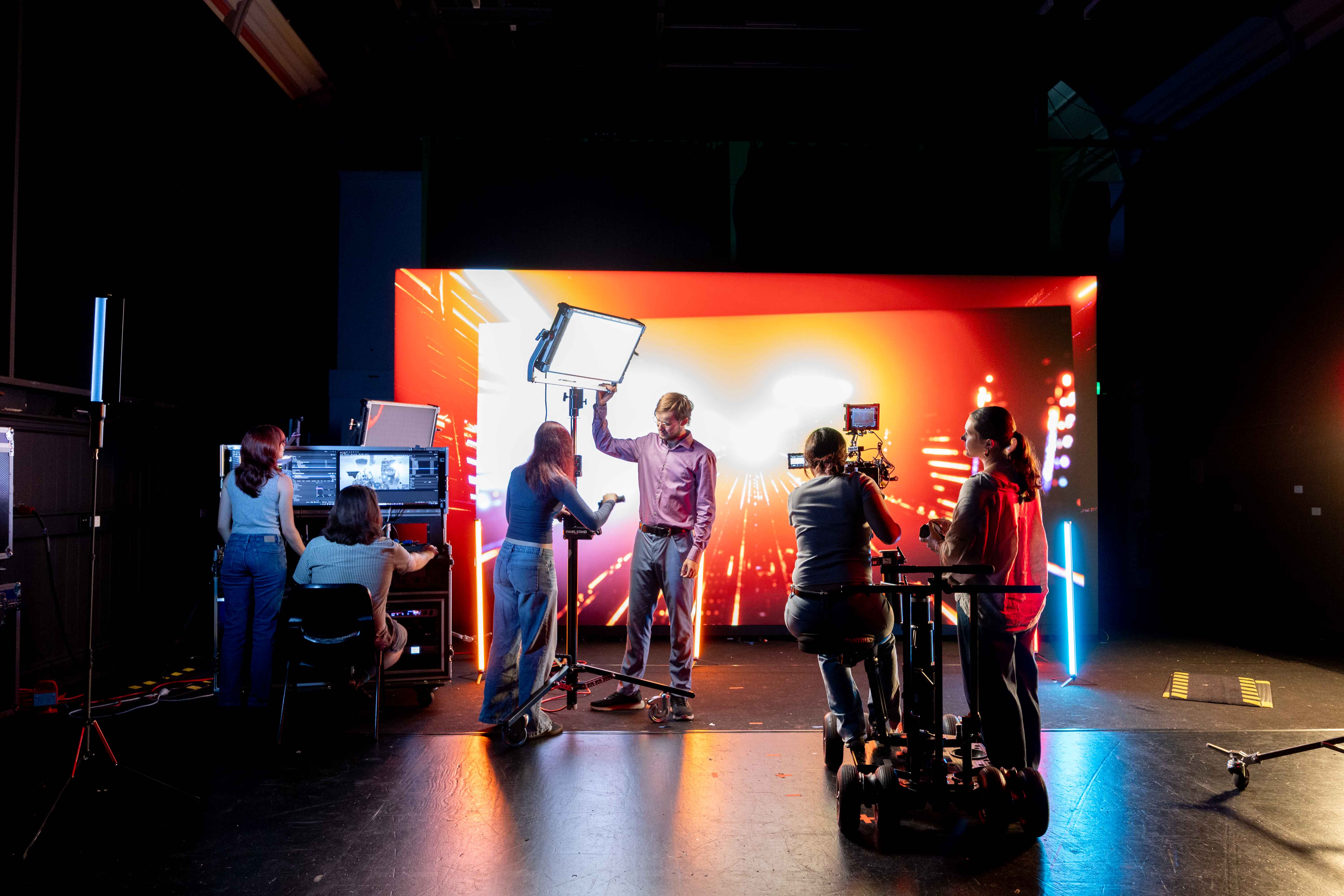
Virtual production is a broad approach to filmmaking that brings together a range of real-time technologies, of which in-camera visual effects (ICVFX) is one of the most prominent. Popularised with the rise of real-time game engines including Unreal, an ICVFX LED wall allows filmmakers to project high-resolution digital environments directly onto large screens on set, creating realistic backgrounds that shift and respond naturally to the camera’s movement. This means actors can perform within a visible, immersive world rather than imagining their surroundings, leading to more authentic interactions and performances. Directors and cinematographers also benefit from being able to compose shots, adjust lighting, and capture visual effects live during filming. Mediated Realities Studio uses a ICVFX stage including Roe Black Pearl LED modules and Megapixel Helios processing, along with pixel-mapped Creamsource and Arri luminaires to achieve realistic visuals when combining physical sets with dynamic digital environments. Virtual production allows researchers to realise streamlined workflows, enhanced creative control, and ambitious and surreal visuals in a collaborative environment.
Photogrammetry
Along with motion capture, photogrammetry is one of the oldest technologies still employed in current creative arts workflows - its relative ease of operation and remarkable realism remain highly desirable. Photogrammetry is a technique used to create highly detailed digital models by capturing real-world objects, environments, or people through a series of multiple overlapping images taken from different angles. Improvements in computing power mean that the specialised software used to reconstruct accurate three-dimensional assets is extremely quick in recent years. The Studio offers a number of camera options suitable for mixed reality captures, including traditional mirrorless cameras as well as 360 degree cameras from companies such as Insta360. A fleet of modern iPhones complete with TrueDepth sensors also offer a portable, compact array of RGBD capture options suitable for remote or portable deployments.
Volumetric Video Capture
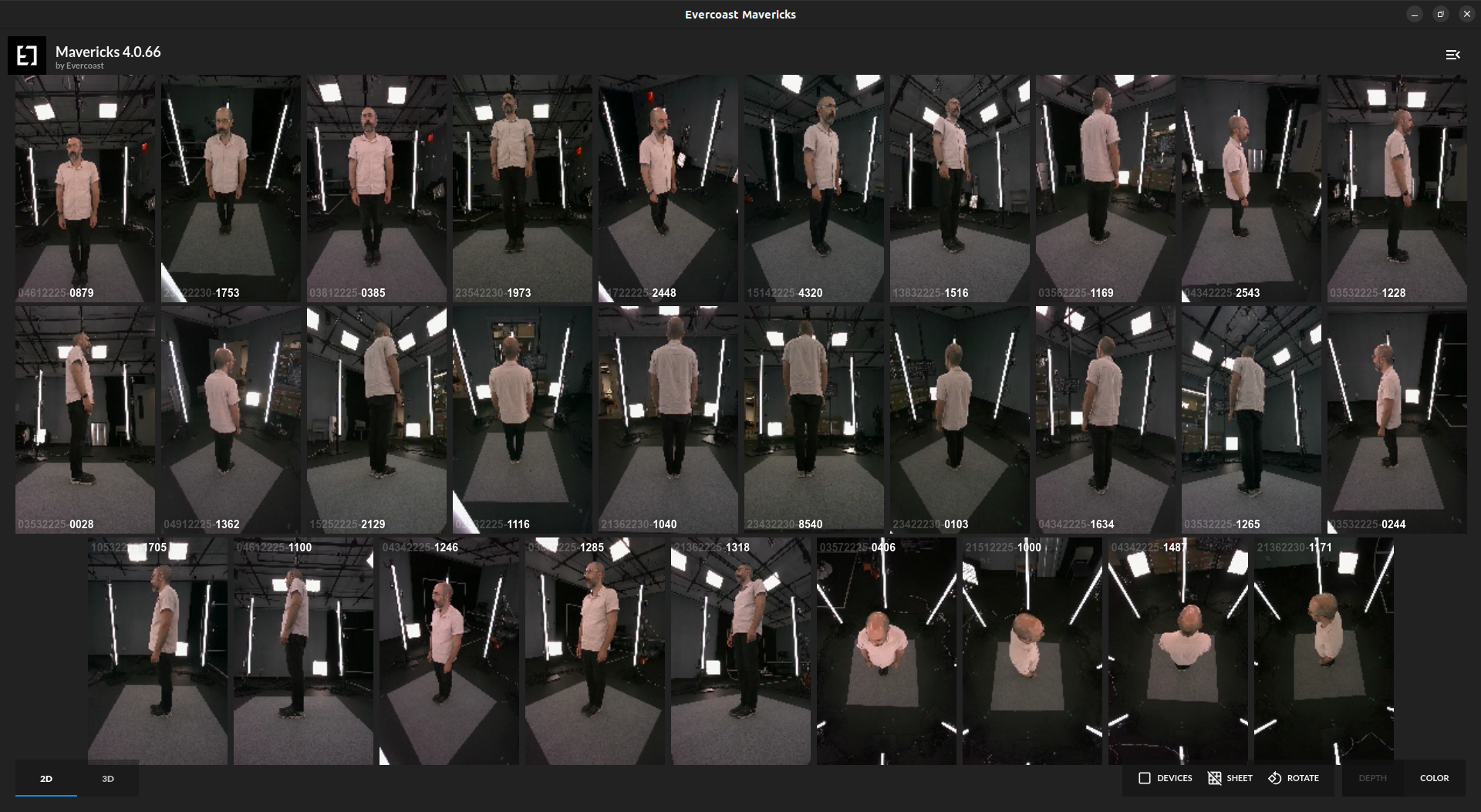
Volumetric video capture is an advanced technique that records people and performances in three dimensions, allowing them to be viewed from any angle in a digital space. Using an array of cameras positioned around a subject, this method captures movement, depth, and detail simultaneously, creating a fully immersive 3D representation rather than a flat video image. As the resulting output is a three-dimensional performance over time (itself a dimension) it is often described as four-dimensional video or 4D video. The processing workflow combines advanced software with high-performance computing to transform multiple camera feeds into immersive 4D assets. Emerging techniques including Gaussian splatting is able to represent the synchronised and calibrated camera feeds as millions of small, soft points in space to achieve high quality visual results with efficient real-time playback.
Image used with permission from Evercoast.
Holographic Display
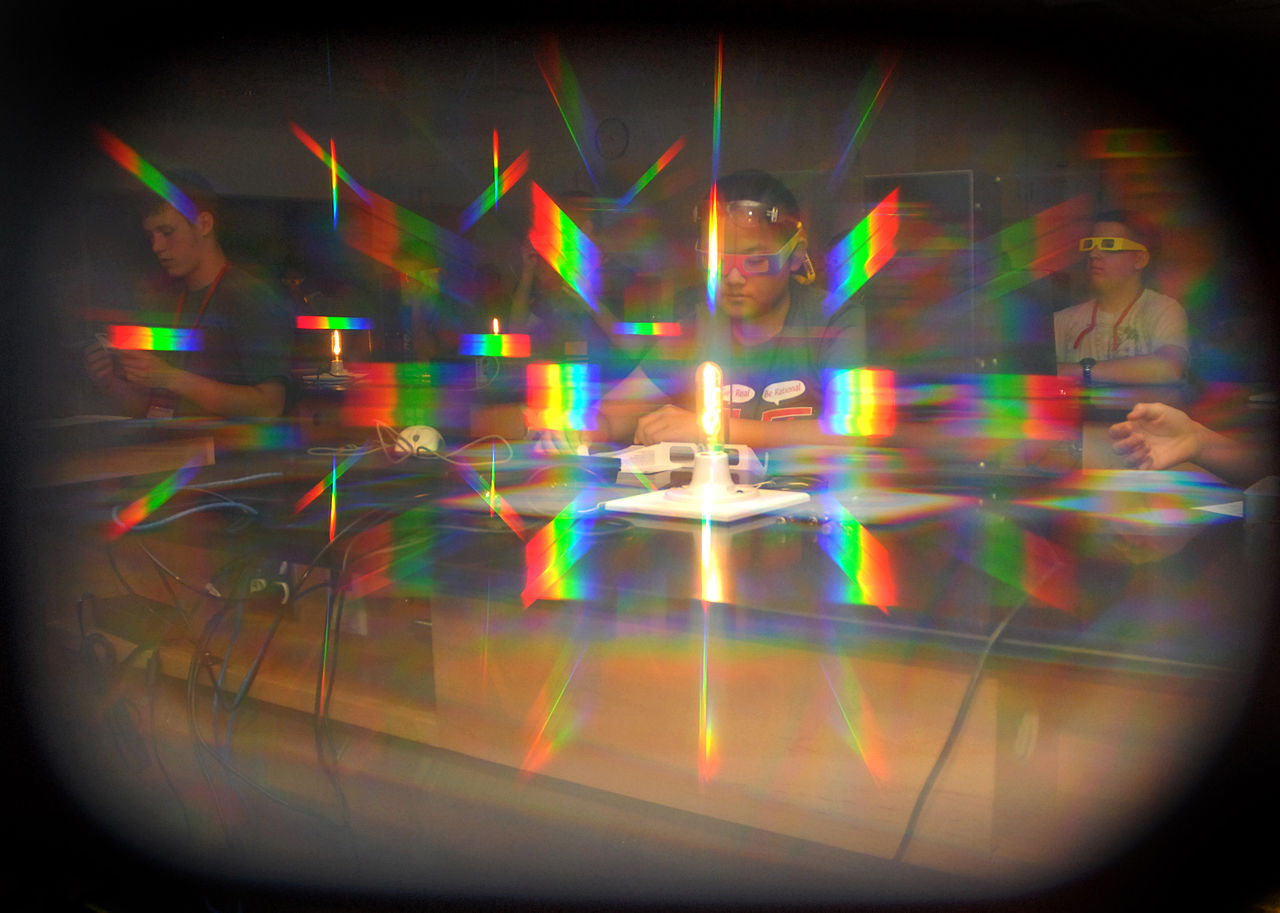
Holographic display technology offers a compelling way for audiences to consume immersive digital content as three-dimensional visuals that appear to exist in physical space. Display technology allows for live group-based experiences without the need for headsets or special glasses that can often isolate
audiences. In a creative arts environment, holographic displays can be used to showcase performers, objects, or environments as lifelike, volumetric experiences that audiences can view from different angles. This makes them particularly effective for exhibitions, live events, and immersive storytelling,
where presence and visual impact are key. The Studio has different display technologies and form factors to ensure there is a right fit whatever your project, including Looking Glass (rectangular form factor) and Holocircle (circular form factor) as well as auxilary control systems including touchscreen,
gesture and gaze tracking, allowing researchers and artists to present digital work in a way that feels tangible, engaging, and visually striking.
Real-Time Creative Systems
Real-time creative systems are technology-driven tools that allow artists and creators to design, visualise, and interact with digital content instantly, rather than waiting for lengthy processing or rendering times. Commonly used in fields like virtual production, interactive media, and game design, these systems enable creative teams to make immediate adjustments to lighting, animation, environments, and visual effects while seeing the results in real time. This broad umbrella includes touchscreen devices including iPads and iPhones, high-end workstations containing powerful NVIDIA GPUs, CPUs and RAM, camera tracking systems such as HTC Vive Mars, and synchronisation/expansion hardware such as Blackmagic Design ProDock. Together with custom software scripting, user interfaces and applications, this hardware ecosystem enables creators to interact with rich, dynamic digital environments without delay, making real-time workflows both responsive and highly immersive.