Collaborate with us to conduct your screening
Our Mass Spectrometry Facility at Nathan offers high-resolution screening services designed to support your research goals.
We collaborate with industry, academia and government from around Australia and internationally, lending our collective expertise to a range of drug discovery and research projects.
Accelerating discovery with precision
Our Mass Spectrometry Facility is equipped with cutting-edge, high-resolution electrospray ionisation instruments that support a wide range of research—from protein analysis to the study of complex interactions with fragments, compounds and natural product extracts. This specialised technique, known as bioaffinity mass spectrometry, enables our researchers to explore molecular binding with exceptional precision.
Our team brings deep expertise in applying high-resolution mass spectrometry to identify novel binding ligands for target proteins—accelerating the path to discovery in drug development and chemical biology. Our mass spectrometry equipment is available for collaborative research projects as well as fee-for-service access.
Facility equipment
Bruker SolariX XR 12 Telsa ICR-FTMS
- ESI and captive ESI nano spray source.
- Chip-based ESI infusion is also possible with the available TriVersa NanoMate (Advion).
- High mass resolution >10 million (isotopic resolution)
- High mass range acquisition of up to 150 kDa
- MS/MS analysis with fragmentation techniques that include collision induced dissociation, electron capture dissociation and electron transfer dissociation.
Main applications:
- Advanced protein analysis including native protein analysis, quantification of protein/ ligand binding affinity, high throughput bioaffinity screening MS/MS analysis.
- Small molecule analysis.
- Complex mixtures, such as natural product extracts.
This equipment was purchased with assistance from an ARC LIEF grant.
Bruker MaXis II ETD UHR ESI QTOF
- ESI and captive ESI nano spray source with nanoBooster.
- High-Mass option facilities, easier characterisation of high-molecular weight species and native state protein complexes.
- Full sensitivity resolution of >80,000.
- MS/MS analysis with fragmentation techniques that include collision induced dissociation and electron transfer dissociation.
- Thermo Fisher Ultimate 3000 RS UHPLC is available for coupling.
Main applications:
- Small molecule analysis for HRMS measurement.
- Advanced protein analysis which includes native protein analysis, high throughput bioaffinity screening.
This equipment was purchased with assistance from the Griffith University research equipment infrastructure scheme.
Low-resolution instruments
These include:
- Thermo Fisher Ultimate 3000 RS UHPLC-ISQ Single Quadrupole Mass Spectrometer.
- Waters Alliance HPLC—Micromass Quattro micro API Triple Quadrupole Mass Spectrometer.
High-resolution accurate mass measurement service
We provide high-resolution mass measurement to determine the molecular formula of chemical entities as a service for Griffith researchers and external organisations.
The sample submission form and guidelines are provided below.
- Sample submission guidelines (PDF, 46Kb)
- Sample submission form (PDF, 90Kb)
Internal bookings
Internal Griffith University users can book our facilities through the iLab application.
External bookings
If you're external to Griffith University and interested in collaborating with us or accessing our state-of-the-art facilities, please feel free to reach out via email.
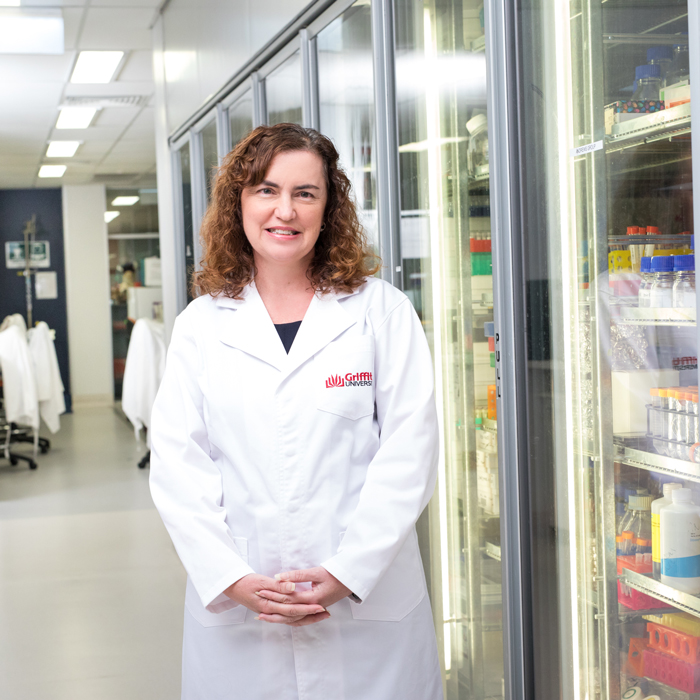
Transforming drug discovery with Fourier Transform Mass Spectrometry
Our researchers are harnessing the power of Fourier Transform Mass Spectrometry (FTMS) to revolutionise early-stage drug discovery—bringing speed, precision and insight to one of the most complex challenges in medical science.
Supported by the Australian Research Council (ARC), our FTMS infrastructure enables rapid screening of thousands of compounds, helping scientists identify promising drug candidates with remarkable efficiency.
This technology is not only fast—it’s also remarkably sensitive and unbiased, requiring minimal protein input compared to traditional methods.
Our commitment to excellence was recognised globally when the Journal of Medicinal Chemistry ranked a paper by the Institute’s own Professor Sally-Ann Poulsen and her team as the top drug discovery tools publication of 2015/2016.
This landmark research placed Griffith at the forefront of FTMS innovation.
Professor Poulsen pioneered the use of FTMS in Australia for studying protein-ligand complexes, becoming one of the first researchers worldwide to apply native state mass spectrometry for fragment screening.
Her work offers a compelling solution to the pharmaceutical industry’s pipeline challenges—delivering smarter, faster ways to discover new medicines.
How FTMS works
Imagine a set of exquisitely precise scales. On one side stands a protein—our drug target—like an elephant. When a potential drug molecule binds to it, the scales detect the tiniest increase in mass, akin to the elephant holding an ice-cream. This subtle shift is the key to identifying which molecules might become tomorrow’s life-saving treatments.
Opportunities
- Expertise in native state mass spectrometry for intact protein analysis.
- Initial assessment of protein targets for fragment screening.
- Full fragment/small molecule screening campaigns using FTMS.
- Qualitative and quantitative analysis of protein-ligand interactions.
- High-resolution mass spectrometry for small molecule characterisation.
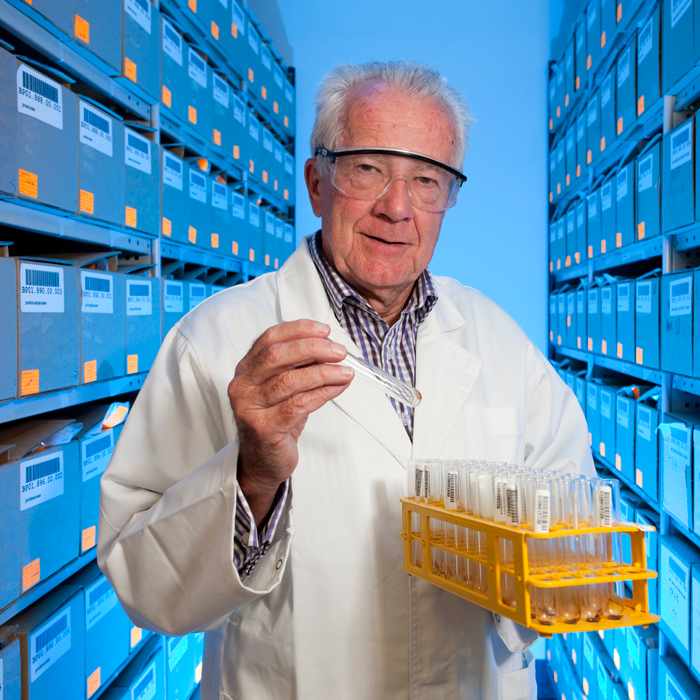
Magnetic Resonance Mass Spectrometry for fragment-based screening
At the Institute for Biomedicine and Glycomics, we're driven by curiosity and committed to advancing the fontiers of drug discovery.
Professor Ronald Quinn and his team are pioneering a transformative approach that harnesses the structural diversity of natural products through fragment-based screening—a method that is modern, fast, and remarkably efficient. In acclaimed paper Capturing Nature’s Diversity published in peer-reviewed journal PLOS ONE, Professor Quinn and his co-authors propose a bold new strategy to reveal nature’s hidden potential for medicinal chemistry.
By identifying fragment-sized natural products from a known database, the Dictionary of Natural Products, they uncovered 422 structural clusters from approximately 2800 compounds—a rich foundation for chemical biology and drug discovery.
What makes this approach so powerful? A small, well-curated library of fragments can represent a vast array of natural products, offering researchers a more agile and insightful way to explore molecular interactions.
Using Magnetic Resonance Mass Spectrometry, Professor Quinn and his group investigated 62 potential protein targets for malaria, discovering 96 low-molecular-weight natural products that bind to 32 of those targets. Impressively, 79 fragments demonstrated direct growth inhibition of Plasmodium falciparum—a promising step toward developing new treatments.
National Collaborative Research Infrastructure Strategy
Our mass spectrometry screening platform, through Therapeutic Innovation Australia (TIA), is part of the National Collaborative Research Infrastructure Strategy (NCRIS), a network of world-class research infrastructure facilities that drives and supports greater innovation in the Australian research sector and associated economic impact.
The mass spectrometry screening platform at the Institute for Biomedicine and Glycomics is a member to the TIA Small Molecule capability, an integrated capability network of National Research Infrastructure, available to support researchers through the TIA Pipeline Accelerator programs.


Funding
Our partners

Success stories
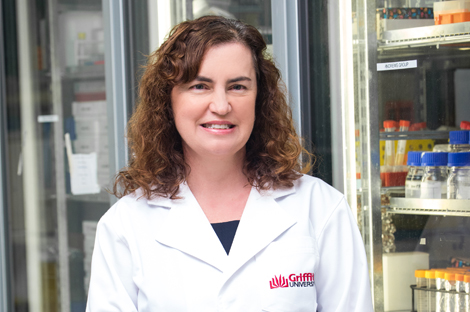
Mass spectrometry screening helped me discover a 'hidden gem' in a fragment-based drug discovery research campaign. This finding provides credence for the relatively untapped opportunity to apply native state mass spectrometry as a complementary fragment screening method to accelerate drug discovery.
- Professor Sally-Ann Poulsen
- Principal Research Leader
- Reference: https://pubs.acs.org/doi/10.1021/acs.jmedchem.7b00606 and https://pubs.acs.org/doi/10.1021/acs.jmedchem.7b00606
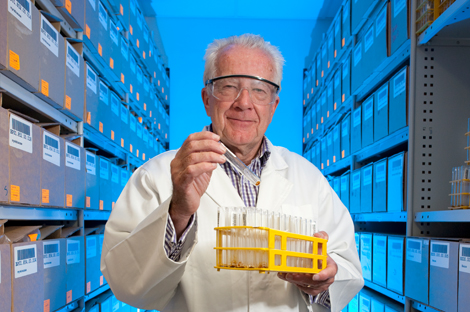
A COVID-19 protein arrived the laboratory in the morning of 30 April, the screen development completed that afternoon and we are now ready to screen for antiviral compounds. This rapid response to COVID-19 was possible because of previous work on the malaria parasite [1] and the microorganism causing tuberculosis [2] where we investigated more that 100 proteins from the respective proteomes.
- Professor Ron Quinn
- Principal Research Leader
- Reference 1: https://pubs.acs.org/doi/10.1021/acsinfecdis.7b00197
- Reference 2: https://www.mdpi.com/1660-3397/18/3/149
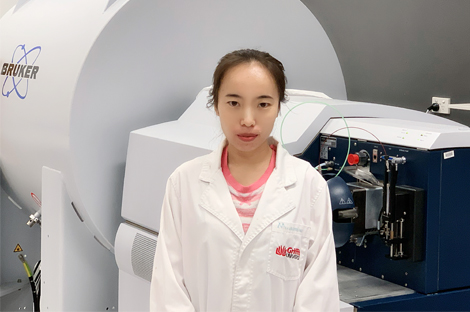
Native mass spectrometry is applied in our group in a combined approach of phenotypic screening and target screening, which we refer to as a PhenoTarget approach. We have showed the powerful potential of the PhenoTarget approach in identifying new lead compounds, from a natural product fraction library, as well as the target protein of the lead compounds.
- Dr Miaomiao Liu
- Research Fellow
- Reference: https://doi.org/10.3390/md18030149
Contact us
Institute for Biomedicine and Glycomics
Griffith University
1 Parklands Dr
Southport QLD 4215
170 Kessels Rd
Nathan QLD 4111