It is often said there is nothing more important than one’s health. At Griffith University, our world-leading teachers and researchers are playing a pivotal role in improving understanding, therapies and outcomes across a range of medical and health areas.
We thank our donors whose support is contributing to discoveries and breakthroughs as our researchers make advances that are truly changing people's lives for the better across a range medical and health areas.

More than $100 million of philanthropy has already been secured to create a brighter future for all.
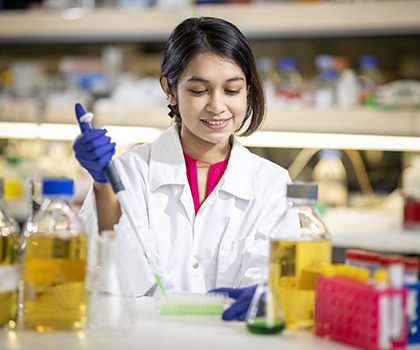
Griffith Institute for Drug Discovery (GRIDD)
GRIDD is a world-class research facility, offering unique resources and drawing on a global network of partners to target the world’s most devastating diseases.
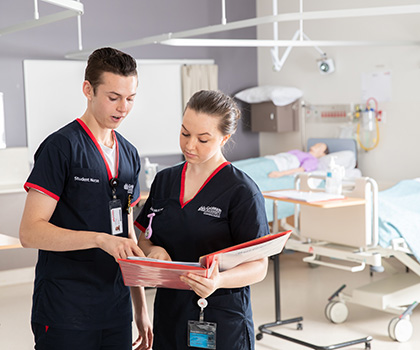
Supporting the community
People are at the heart of our research and education ensuring the health and wellbeing of our communities remains a priority.
Institute for Glycomics
Help researchers in their mission to discover and develop drugs, vaccines and diagnostics to advance positive health outcomes across the globe in the field of glycomics.
Institute for Biomedicine and Glycomics
A donation to the Institute for Biomedicine and Glycomics helps researchers continue their fight against disease through research:
- Cancer – Including the ACRF International Centre for Cancer Glycomics (ACRF I2CG): Cancer is a significant global health issue and a leading cause of death worldwide. Our specialists are exploring a wide range of treatments, tackling challenges such as drug resistance, and advancing diagnostic technologies for various cancers including breast, ovarian, prostate, lymphoma, melanoma, sarcoma, brain tumours and rare cancers. Our research and key clinical collaborators place us at the cutting edge of cancer glycomics, a field that examines the interactions between sugar molecules and proteins on the surface of cancer cells. Our researchers are leveraging this innovative approach to discover new solutions for cancer diagnosis and treatment.
- Infectious disease research: Infectious diseases represent some of the most significant health challenges globally, claiming millions of lives each year. There is an urgent need to develop new strategies to combat diseases caused by bacterial, viral, parasitic and fungal pathogens. The rising threat of antibiotic resistance further exacerbates this global concern. Our experts are committed to discovering innovative approaches to address antibiotic resistance and the shortage of effective vaccines for some of the world’s most serious viral and bacterial pathogens.
- Neurological Diseases Research: Neurological conditions are characterised by the progressive degeneration of the structure and function of the central and peripheral nervous systems, leading to issues with movement and mental function. As the global population ages, the number of people affected by these conditions is expected to rise. Our experts are addressing conditions such as spinal injury, neurodegeneration, peripheral nerve repair, axon degeneration, Parkinson’s disease, mental health, PTSD and pain. Their goal is to deliver solutions that significantly improve the quality of life for individuals with diseases and injuries of the nervous system.
Supporting the community
Supporting researchers and educators to provide a holistic approach to healthcare and using this knowledge to help our communities thrive now and into the future.
- Australian Institute for Suicide Research and Prevention (AISRAP): promoting high quality research, clinical practice and education for the prevention of suicidal behaviour in Australia.
- Fetal Alcohol Spectrum Disorder (FASD): FASD causes lifelong physical, neurological, development and behavioural problems for children, if their mother drinks alcohol while pregnant or breastfeeding. Early diagnosis and intervention is critical in delivering early interventions that effectively support structural and functional brain development.
- Parents Under Pressure (PuP): dedicated to reducing child abuse in vulnerable families through the cultivation of positive relationships between parents and their children (from birth to eight years).
Ready to make your gift?
Thank you for your generous support. Every gift makes a difference.
Potential vaccine treats and prevents deadly streptococcal toxic shock
A new vaccine developed by Griffith University Institute for Glycomics researchers has the potential to treat and prevent toxic shock caused by invasive streptococcal disease, which kills more than 160,000 people every year.