Bringing birthing back to country
Flying high as cabin crew for QANTAS , Melanie Briggs never imagined being grounded. She was young and with the world in her hands. But 18 years ago, that life was changed with the birth of her godson.
Melanie’s best friend asked her to be there for the birth because the father was incarcerated at the time. The birth of Melanie’s godson was the moment when she found a new calling: to become a midwife.
“It was the first birth I had ever been to and at the time I was young, I was travelling, I thought I was going to stay at QANTAS forever,” she says.
“It was a beautiful experience seeing him take that first breath, I was watching life happen before my eyes.”
“It was also incredible getting to witness my best friend go through that, her bravery, her power, it was so inspiring. I felt lucky to have been called into that sacred space,” Melanie says.
Her new calling firmly in mind, Melanie applied to the University of Technology Sydney’s Bachelor of Midwifery. She was one of only five Aboriginal students enrolled that year. During her studies she also worked as a New South Wales Health cadet at the Royal Hospital for Women in Randwick, consolidating her learning on the job.
“It helped my understanding and I got to put all my learning into practise. I’m a hands-on learner, I want to do things rather than just read about them,” she explains.
After completing her undergraduate degree, she kept working at the hospital until she moved to Shoalhaven on the New South Wales South Coast, where she’s been based for the last 11 years as the Senior Midwife at Waminda South Coast Women’s Health and Welfare Aboriginal Corporation.
During this period, Melanie took the next step on her professional journey enrolling in the Master of Primary Maternity Care at Griffith University. But by then her needs had changed, she was raising young children, working full-time and needed something that suited her lifestyle.
“It was difficult at the time but travelling to study just wasn’t a realistic option. Having the flexibility to study online with Griffith let me continue my work at Waminda and to raise my young family.”
Melanie was also nominated by a former Griffith lecturer for the 2022 HESTA Australian Midwife of the Year award, which she won, in recognition of her tireless efforts to change the mainstream model of care that she was learning at university.
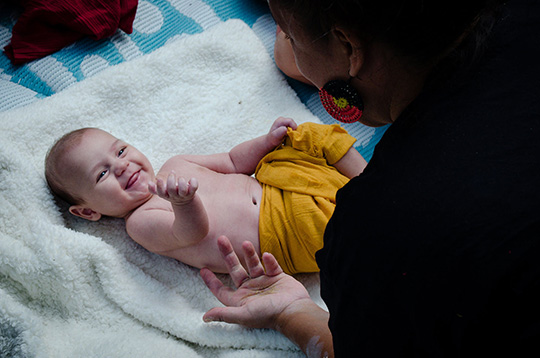
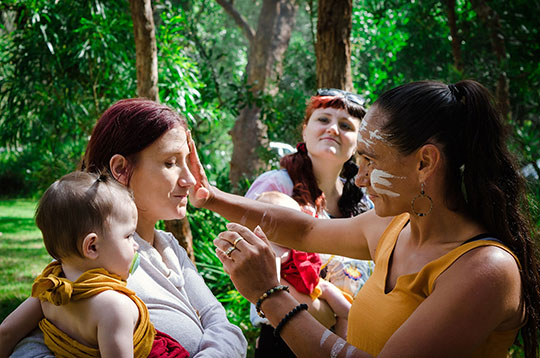
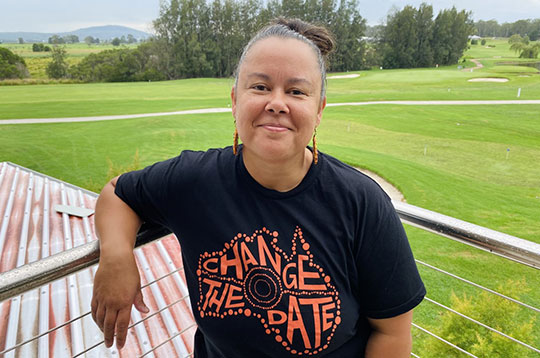
A descendant of the Dharawal and Gumbayngirr—saltwater people, living on Aboriginal country with Western medical training, Melanie was the right person for this immense project. She has since overseen the implementation of a successful Birthing on Country program at Waminda.
Birthing on Country is a social justice movement pushing for system-wide reform, including the return of birthing services to First Nations communities and First Nations control. Melanie says integrating traditional knowledge and practices into maternity care and doing it on country, improves clinical outcomes for First Nations mothers their newborn child.
“It’s about reclaiming our ways of knowing, being and doing for the women and the traditional people of this country,” she says.
“It’s about using the ways that we used to birth on country, in spaces where our pregnant women can be vulnerable. We want those pregnant women to express and experience their cultural lore and practices with their mothers, their aunties, partners and family.”
Melanie is also the founder and director of the first Aboriginal-led maternity model of care in Australia: Binjilaanii Maternity Services. She explains that bringing birthing services into these remote communities strengthens the spiritual and ceremonial connection to their land.
“It’s not just about access to high quality maternity care, many women don’t have the means to drive an hour to a hospital. It’s a holistic model of care. There is the partner, the family and we include them because they influence the health outcomes of that child.”
“We also wrap the right health services around these women so they are properly supported to be healthy and willing during their pregnancies and during birthing. We want our babies to have the best possible start to life.”
But there’s a deeper reason for Melanie’s advocacy, to redress the harms and neglect First Nations mothers have endured in a health care system struggling with its own colonial past and institutionalised racism.
“Our mainstream health care system is a colonised system that was not made for us. There’s a real lack of awareness among doctors and nurses of that history and how it impacts First Nations patients. The system blames us and we’re always the problem.”
She says First Nations people have been forced to navigate a system that imposes and enforces assimilation to its ways, with little respect for traditional knowledge and cultural practices.
“Medical professionals need to be aware of their privilege and the limits of their understanding, our connection to the land is spiritual. Bringing life onto country is sacred. We need to break down barriers, teach cultural awareness and the system needs to account for its biases.”
Addressing this historic power imbalance means First Nations communities will also build greater trust in the mainstream system according to Melanie.
“Accountability means more Aboriginal people in mainstream services and more Aboriginal led models of care on country. We also need collaborative relationships with local hospitals, to access those services when needed. We’re getting there, but slowly.”
For Melanie and her team, their mantra isn’t just to close the gap for First Nations people, but to smash it with their model of care.
“We don’t just want to be equal. We want to be better than the historic deficit thinking imposed on us. Our people want to be healthy and well. We want to dictate better outcomes with our ways and our knowledge.”
Melanie’s tireless advocacy for change has been recognised with an Australian Government grant of over 22 million dollars to expand the capability of this unique maternity service with a new birthing centre.
Despite all these positive gains and her achievements over her career, Melanie still finds the greatest joy and satisfaction comes from the babies in her care.
“I just love babies. We see the mums through pregnancy, then at the birth and when they come in for their check-ups with their bubs. They are running after them, cooing and talking in their language,” she says.
“That’s still amazing to me. When the baby tries to talk to me, that’s still my favourite part.”
Stay connected
Keep in touch with your alumni community.