Events
Australian Research Centre for Human Evolution
What’s on at ARCHE
ARCHE hosts and contributes to a range of events that celebrate and explore the field of human evolutionary study.
Previous seminars
Tuesday, 24 February 2026: Dr Julie Trafford presents, "Remembering the futures of planetary health."
Thursday, 19 March 2026: Dr Oren Kolodny presents, "Why did Moderns replace Neanderthals and not vice versa?"
Tuesday, 24 March 2026: Dr Youssef Nassef presents, "Cultural hertiage in changing climate."
Tuesday, 12 May 2026: Prof. Chris Clarkson presents, "First Peoples and Rising Seas: Rewriting Australia's Deep History." ~ presented in Partnership with Rock Art Australia
Friday, 29 May 2026: Pratiwi Yuwono & Stuart Hawkins presents, "Neolithic Mortuary Practices, Cultural Identity, and Health at the Kolana Cemetery, Alor Island, Indonesia (3500-2500BP)"
Tuesday, 21 October 2025: Dr Sean Goodwin presents, "How do we know if cities are adapting to climate change?"
Thursday, 14 November 2024: Dr Dafne Koutamanis presents, "Reconstructing Pleistocene food webs: the potential of non-traditional isotopes."
Thursday, 26 September 2024: Dr Jorgo Ristevski presents, "The crocodylian record from the Quaternary of Australasia."
Tuesday, 28 May 2024: A/Prof Glendon Parker presents, "Leveraging the human enamel proteome: sex-bias and insights into human biology and anthropology."
Thursday, 16 May 2024: Dr Loukas Koungoulos presents, "Archaeology of the dingo: new insights & future directions."
Thursday, 18 April 2024: Dr Mathew Stewart presents, "Deserts and biomolecules: a two-part talk on the prehistory of the Arabian Peninsula and Zooarchaeology by Mass Spectrometry (ZooMS)."
Thursday, 29 February 2024: A/Prof Qing Yang presents, "The Earliest Hoabinhian Site of Southeast Asia: Environmental Adaptations and Plant Utilization of Human Populations."
Wednesday, 22 November 2023: A/Prof Kira Westaway presents, "The role of dating in defining extinctions; the long and short of it."
Wednesday, 22 November 2023: A/Prof Yan Zheng presents, "Magnetism and its application in the chronology and archaeology of China."
Wednesday, 8 November 2023: Dr Emma Finestone presents, "Hominin behavior and ecology during the Oldowan: new insights on early tool-use.”
Thursday, 16 August 2023: Dr Mariya Antonosyan presents, "What can molecules tell us? Multiproxy evidence for Late Pleistocene environmental stability in the Lesser Caucasus.”
Thursday, 16 August 2023: Dr Carli Peters presents,"Palaeoproteomic analysis of Australian faunal assemblages: potentials and challenges."
Friday, 4 August 2023: Dr Stuart Hawkins presents, "The peopling of the interior of Wallacean islands."
Monday, 31 July 2023: Prof Kristian Tylén and Dr Izzy Wisher present,"eSYMb: The Evolution of Early Symbolic Behaviour."
Monday, 12 June 2023: A/Prof Glendon Parker presents, "Leveraging Proteomic Data for Sex Estimation and Forensic Genotyping."
Wednesday, 17 May 2023: A/Prof Keliang Zhao presents, "Anthropogenic impact on Holocene vegetation in China."
Wednesday, 19 April 2023: A/Prof Shixia Yang presents, "New Palaeolithic Explorations in Eastern Asia."
Friday, 24 March 2023: Prof Lee R. Berger presents, "The future of exploration in the greatest age of exploration."
Thursday, 23 February 2023: Prof Peter Hiscock and Prof Kim Sterelny present, "Red Queen in Australia. Co-evolution and adaptive strategy explain Late Holocene cultural change in Australia."
Friday, 17 February 2023: Prof Hongbo Zheng presents, "'A tale of rice.'
Thursday, 1 December 2022: Dr Davide Delpiano presents, "Virtual approaches applied for the analysis of Neanderthal knapping technologies."
Thursday, 10 November 2022: Associate Professor Jonathan Benjamin presents, "Archaeology and geomorphology of a submerged cultural landscape at Murujuga Sea Country, Northwest shelf (Dampier Archipelago), Western Australia."
Thursday, 6 October 2022: Associate Professor Renaud Joannes-Boyau presents, "Inside human evolution fossil remains: deciphering signals of the past."
Friday, 9 September 2022: Dr Daniel Green presents, "Oxygen isotope records in teeth: exploring climate-evolution dynamics in equatorial Africa"
Raymond Dart Lecture series
The Raymond Dart Lecture is an annual ARCHE event, organised by Griffith Sciences, which pays tribute to one of Australia’s most celebrated palaeoanthropologists.
Born and raised in the Brisbane suburb of Toowong, Dart discovered the first fossil record of Australopithecus africanus—an extinct hominin closely related to humans—in 1924 in South Africa. His work, both in unearthing and analysing the remains, proved crucial in establishing Africa, not Europe, as the most likely origin of our species.
To celebrate his life and legacy, this lecture series presents some of the brightest minds and newest research in palaeoanthropology. It also provides a unique opportunity for academics in the field to connect and discuss their work.
Previous Raymond Dart Lectures
Homo sapiens: An incredible story of migration, vulnerability and resilience
Our species, Homo sapiens, originated in Africa about 300,000 years ago, ultimately spreading around the world in multiple waves. The understanding of our origin story and the timing and pathways of our migrations around the globe is changing owing to new field explorations and innovative scientific studies. Today, there are 8 billion humans, and we are now responsible for shaping our planet's ecosystems in an unprecedented fashion, leading to a series of environmental and social crises. At the Raymond Dart Forum, which was held on 11th December 2023, ARCHE's world-leading scientists discussed what we know about our evolution, examining our resilience to past crises, while exploring our vulnerabilities in the past and today. MC and Moderator: Professor Michael Petraglia. Speakers: Professor Adam Brumm, Dr Jillian Huntley, Associate Professor Michelle C. Langley, Professor Tanya Smith, and Dr Jayne Wilkins.
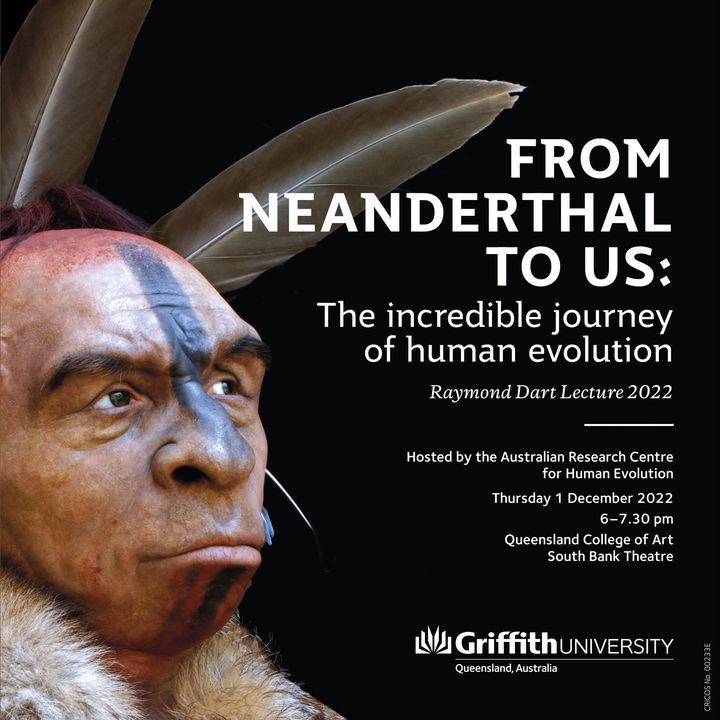
From Neanderthal to us: The incredible journey of human evolution
From Neanderthal to us: The incredible journey of human evolution was recorded on the 1st December 2022. For most of the 20th century, it was thought that our closely related ancestors of Eurasia, including the Neanderthals, were not able to express symbolic behaviours comparable to us, Homo sapiens. However, new archaeological excavations are increasingly showing that the Neanderthals were capable of abstract thinking. Marco Peresani is a Professor at the University of Ferrara in Italy where he designs and coordinates field research projects focused on human populations in Mediterranean Europe, particularly in the north of Italy and the Alps.
How do we turn the current crisis into a “Portal Moment”?
Recorded on 17 September 2020, this talk by Professor Rebecca Ackermann explores how the disruption caused by the coronavirus pandemic has highlighted systemic issues that affect how science is conducted. Through this investigation, Professor Ackermann proposes that the current crisis caused by the pandemic could be used as a “portal moment” to transform palaeoanthropology into something better and more equitable. Professor Ackermann is part of the Department of Archaeology and Director of the Human Evolution Research Institute at the University of Cape Town, South Africa.
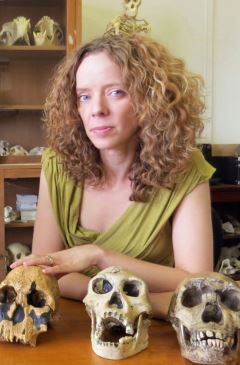
How well do we know the ‘Hobbit?’
In this lecture, recorded on June 25 2019, Professor Dean Falk discusses the controversies surrounding Homo floresiensis and how new evidence has blazed the trail for reconsidering the big picture of human evolution. Professor Falk explores the debates that emerged after discovery of the ‘Hobbit’, drawing close parallels to the intellectual turf-guarding and palaeopolitics that immediately followed Raymond Dart’s unearthing of Australopithecus africanus. Professor Falk is the Hale G. Smith Professor of Anthropology and a Distinguished Research Professor at Florida State University. Her interests include brain evolution and the emergence of language, music, warfare and analytical thinking in humans.
Before we changed the climate, did the climate change us?
For the fourth annual Raymond Dart Lecture, Griffith University welcomes Dr Rick Potts to discuss the significance of climate adaptability when exploring the origins of our species. As an example, Dr Potts highlights how climate dynamics and resource uncertainty may have influenced the development of mobile technologies, social networks and symbolic behaviour around 320,000 years ago in the southern Kenya rift valley. Dr Potts is a paleoanthropologist and Director of the Human Origins Program at the Smithsonian Institute in Washington DC.
The Unknown: An evening with Nature editor Dr Henry Gee
In the second annual Raymond Dart Lecture, Dr Henry Gee makes the claim that science is not about what we know but, instead, about what we don’t—and that the more we discover, the more we reveal how little we understand about the world we inhabit. This, he asserts, should not be the source of despair but rather an energising excitement. Dr Gee has been an editor at the international weekly science journal Nature for the last 30 years, seeing to publication a range of groundbreaking findings, from feathered dinosaurs to Homo floresiensis—the extraordinary ‘Hobbit’.
Origins, by Professor Bernard Woods
Recorded on 19 May 2016, this talk by Professor Bernard Woods explains why the search for reliable answers to the when and the why of humanity’s origins is almost certainly doomed to failure. This, Professor Wood argues, is not necessarily an impediment to progress; rather, it is an indication that we must instead learn to live with an incomplete data set and accept that there are questions in human evolution that will never be answered to our satisfaction. Professor Wood is one of the world’s leading palaeoanthropologists and heads the Center for the Advanced Study of Human Palaeobiology at George Washington University, USA in the Columbian College of Arts and Science. His research interests centre around a long-term fascination with hominin systematics.