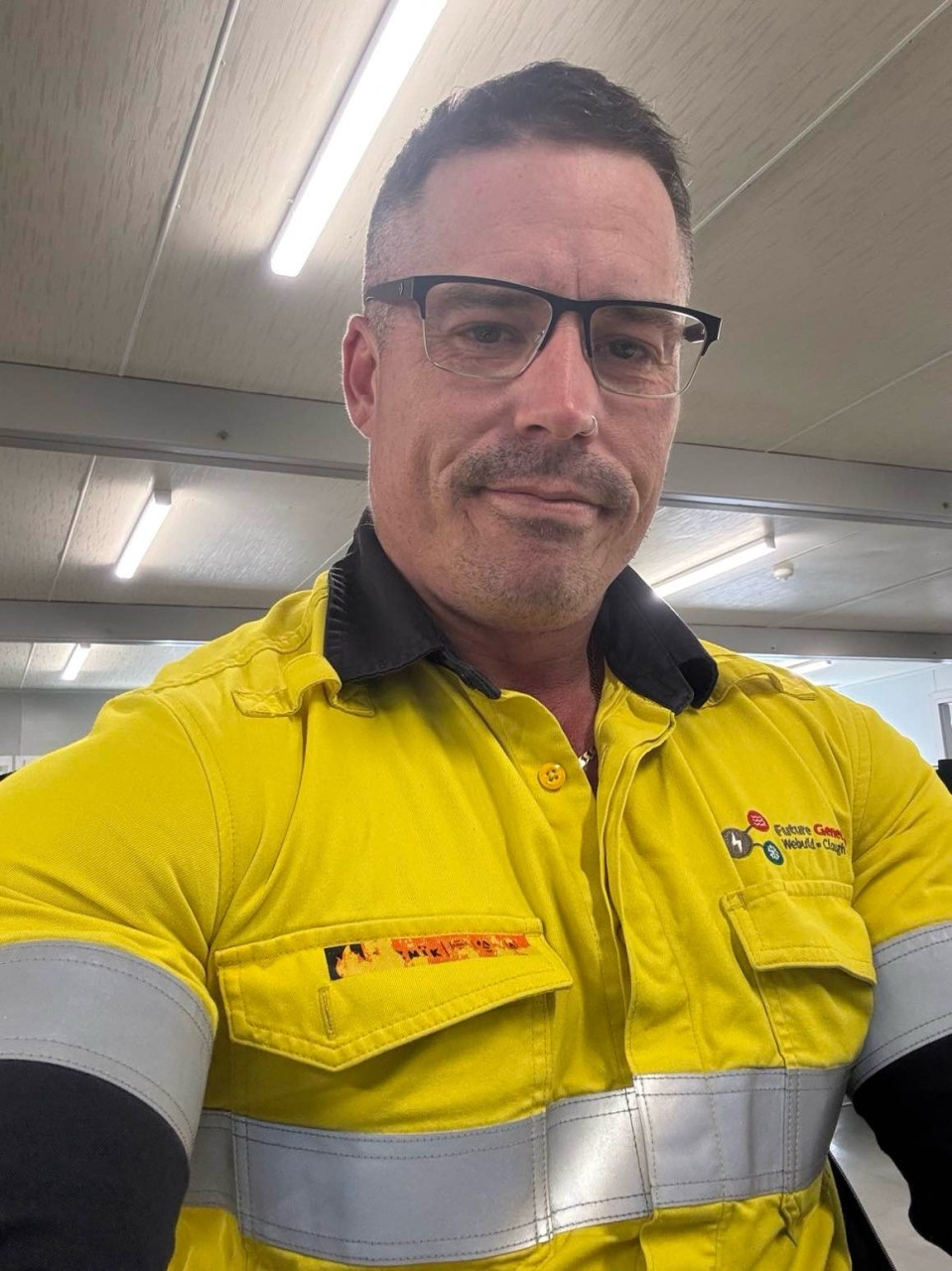
Pictured: James Musicka.
You decided to do a trade as an adult apprentice which eventually took you all around Australia for work. What did that early career look like and what did you learn from working in those different environments?
Doing an adult apprenticeship was quite daunting to start with, as I had held numerous jobs beforehand and hadn’t done very well at school. I started in coal mining, working in central Queensland, both open-cut and underground. I became a tradesperson, which opened up many avenues across different industries and allowed me to travel all around the country in construction and mining. What I learnt in these environments came from my peers’ experiences and the importance of the industry to the economy and local business through the flow-on effect. I also learnt how businesses have changed over the years and become more conscious of sustainability and the environment.
At what point did you start noticing the leadership and commercial side of the companies you were working for – and what sparked your interest?
After working with major companies in Australia, like BHP and Webuild, later in my career, I noticed the difference in how they operate and what it takes from everyone for businesses to be successful. Everyone in the business plays a part, and all are equally important to ensure a legacy for the next generation. My interest was sparked by seeing how other people and businesses operate and what makes a business. I have had many influential leaders in my career and have wanted to strive to make a difference and help others along the way. Being Indigenous, I wanted to show that you can achieve anything and that it is possible.
What made you consider further study and how did you end up starting the Graduate Certificate in Business Administration at Griffith?
My decision to pursue further study evolved over time through my experience in mining and construction. As I progressed into leadership roles, I realised that while my technical skills were strong, I lacked formal knowledge in key business areas such as finance, strategy, and governance. Exposure to senior decision-making underscored the importance of these skills and prompted me to reassess my career direction. To transition into more strategic and executive roles, I recognised the need to strengthen my business acumen. The Graduate Certificate in Business Administration at Griffith University offered a practical, flexible pathway to build this foundation while continuing to work. Starting the program marked a shift in my career, moving from a technical focus to broader leadership and strategic capabilities.
You’re studying while working full-time in a FIFO role. How do you manage study alongside long shifts, travel and time away from home?
Managing full-time FIFO work alongside study requires discipline, structure, and flexibility. I plan my study around my roster, using travel time and quieter periods on site to complete readings or smaller tasks, and I allocate more focused time on days off for assessments. Working long shifts means I have to be realistic I set achievable weekly goals rather than overloading myself. I stay organised by breaking assignments into smaller parts and starting early to avoid pressure during swing. Being away from home can be challenging, but it also reduces distractions, helping me stay consistent. Overall, it comes down to routine, time management, and maintaining a clear focus on long-term goals.
How has completing the MBA helped so far – either on site, in conversations with leaders or how you think about your career?
So far, completing my MBA has shifted how I operate on site and engage with senior leaders. I now approach problems with a broader perspective considering not only the technical outcome but also cost, risk, stakeholder impact, and long-term value.
In conversations with leaders, I’m more confident contributing at a strategic level. I better understand the commercial drivers behind decisions, which helps me align my thinking with broader business priorities. It has also reshaped how I view my career. I’ve moved from seeing myself as a technical specialist to building towards executive leadership, with a clearer focus on strategy, governance, and organisational performance.
What would you say to other tradespeople who might be curious about an MBA but don’t think it’s for someone with their background?
I’d say an MBA isn’t just for people from corporate or finance backgrounds; it’s highly valuable for tradespeople. Coming from a practical, on-the-ground role is an advantage because you understand how work really gets done. The MBA builds on that by providing the language and tools of business, such as finance, strategy, and leadership, so you can step into higher-level roles with confidence. It’s not about changing your background; it’s about strengthening it. If you’re willing to put in the effort, your background isn’t a limitation; it’s a strength. I have a motto I tell everyone, “The hardest thing we do in life is, as a baby, to walk, talk and eat. You learned that so you can achieve anything you put your mind to.” The only limits we have are the ones we put on ourselves. Everyone learns and takes things differently.
You may also like
Melissa Mullen
Melissa Mullen is a Senior Advisor of Safety Systems and Training at Australia’s largest rail freight operator, Aurizon. We, the MBA Team sat down with Melissa to gain an insight into her dynamic role and how she has harnessed the skills she has acquired through her MBA studies.

Jordan Walsh
Jordan completed his MBA while juggling a demanding career, family life, volunteering and taking part in the Global Business Challenge. How did he manage that balance, and what drew him to the Griffith MBA?