
From Ireland to Australia, Naomi’s journey has shaped a distinctive perspective on leadership, learning and impact. Now serving as Director of the Griffith MBA, Naomi brings a deeply human and purpose‑driven approach to developing leaders in an increasingly complex world.
In this conversation, Naomi reflects on the experiences that have influenced their thinking, what a contemporary MBA must deliver to remain relevant, and why effective leadership is less about having the answers and more about creating the conditions for growth, learning and meaningful change.
Looking back on your journey from Ireland to Australia, which experiences have most shaped the way you think about leadership and learning?
Looking back, the move from Ireland to Australia was far more than a geographic shift, it fundamentally reshaped how I think about leadership and learning. Growing up and beginning my academic career in Ireland grounded me in a strong sense of community, storytelling, and social responsibility. Leadership there often felt relational before it was positional - about trust, conversation, and showing up for people. That early experience shaped my belief that leadership is not something you do to others, but something you do with them.
Australia added a different, equally powerful layer. The higher education environment here challenged me to think more boldly and systemically to be comfortable with experimentation, to back ideas through action, and to lead in contexts of uncertainty. I learned that good leadership requires not just empathy, but courage: the willingness to question long‑held assumptions and redesign systems that no longer serve people or the planet.
Across both contexts, what has stayed constant is my conviction that learning must be experiential and purpose‑driven. Whether working with students, entrepreneurs, or organisational leaders, the moments that matter most are when theory meets real‑world complexity, when people are trusted to grapple with ambiguity and reflect deeply on their impact. Ultimately, my journey taught me that effective leadership is less about having the answers and more about creating the conditions for learning, growth, and meaningful change. That belief sits at the heart of how I teach, research, and lead today.
What do you believe a contemporary MBA must genuinely deliver to remain relevant and valuable in today’s business environment?
A contemporary MBA must deliver far more than technical skills to remain relevant. It must prepare leaders to navigate complexity, uncertainty, and responsibility, not just competition.
First, it must build adaptive judgment. Knowledge is abundant; what leaders need is the ability to integrate information, think systemically, and make sound decisions amid ambiguity and competing stakeholder demands.
Second, a modern MBA must genuinely integrate purpose and performance. Sustainability, ESG, and responsible leadership can no longer sit at the margins. Graduates must understand how social and environmental value creation underpins long‑term organisational success and be able to translate purpose into strategy.
Third, relevance depends on experiential learning. Students should engage with real organisations and live challenges, applying theory in practice and reflecting on the consequences of their decisions. This develops confidence, accountability, and the ability to move from insight to action.
Leadership development must also be central. That means focusing not just on frameworks, but on self‑awareness, ethical courage, inclusion, and resilience, as these are capabilities which are essential for leading diverse teams in volatile contexts.
Ultimately, a contemporary MBA should foster a lifelong learning mindset, equipping graduates to continuously adapt as industries and expectations evolve. The goal is not to reproduce yesterday’s managers, but to develop leaders capable of shaping a better future for business and society.
Entrepreneurship and innovation are often associated with disruption and speed — what do you think is most misunderstood about leading innovation well?
Entrepreneurship and innovation are often framed as fast, disruptive, and idea‑driven, but what is most misunderstood is that leading them well is less about speed and more about judgement. In entrepreneurship, momentum matters. Enduring ventures are built through disciplined experimentation, not constant disruption. Successful entrepreneurs understand when to move quickly and when to pause, learn, and adapt. Innovation without direction can burn capital, people, and credibility just as easily as it creates opportunity.
Another misconception is that innovation is primarily about ideas. In practice, both entrepreneurship and innovation succeed through execution, resilience, and people. Great founders and innovation leaders focus on building teams, establishing trust, and creating environments where learning from failure is possible, while remaining accountable for outcomes. It is also often overlooked that not all innovation is radical. Many of the most impactful entrepreneurial innovations are incremental, customer‑centred, and focused on solving real problems better, rather than creating novelty for its own sake.
Ultimately, strong entrepreneurial innovation leadership is about balancing ambition with responsibility. It requires long‑term thinking, ethical awareness, and a clear understanding of value creation, not just for shareholders, but for customers, employees, and society. The leaders who innovate best are those who combine entrepreneurial courage with thoughtful stewardship, thereby ensuring that progress is not only fast, but meaningful and sustainable.
Family businesses are a big part of the Australian business landscape — what do you find most interesting about how they lead and endure?
What I find most interesting about family businesses is the way they often balance long‑term stewardship with commercial discipline. Unlike many publicly listed firms that are under pressure to deliver short‑term returns, family businesses tend to think in generational timeframes. That creates a different approach to leadership, one grounded in continuity, reputation, and legacy.
In the Australian context, this long‑term orientation often translates into deep local commitment. Family businesses are typically embedded in their communities, with strong relationships with employees, suppliers, and customers. Leadership is less about hierarchy and more about responsibility, protecting both the enterprise and the people who depend on it. Another fascinating aspect is how family businesses manage succession and renewal. Endurance does not come from resisting change, but from carefully navigating it, bringing in new capabilities, professional management, and external perspectives while preserving core values.
Those that succeed are often very deliberate about separating ownership from management and about preparing the next generation to lead with both humility and commercial acumen. Ultimately, family businesses show us that longevity in business is rarely accidental. It is built through patient leadership, strong relationships, and a clear sense of purpose that endures beyond individual leaders or market cycles.
In the context of ongoing economic uncertainty and geopolitical complexity, what capabilities or mindsets do you see as most critical for MBA graduates?
In an era of economic uncertainty and geopolitical complexity, the most critical capability for MBA graduates is sound judgement under ambiguity. The challenge is no longer a lack of information, but the ability to interpret competing signals, balance trade‑offs, and act responsibly when there are no clear answers. Equally important is a global and systems perspective. Today’s leaders must understand how geopolitical tensions, supply‑chain fragility, sustainability imperatives, and social expectations intersect. Decisions made in one part of the world can have far‑reaching and unintended consequences.
Resilience and adaptability are also essential. Graduates need the confidence to lead through disruption, to recalibrate strategy as conditions shift, and to remain effective in environments defined by volatility rather than stability. Just as critical, is that we need leaders with ethical courage and empathy. In uncertain times, trust becomes a strategic asset. MBA graduates must be able to engage diverse stakeholders, lead inclusive teams, and make decisions that balance performance with responsibility.
Finally, a lifelong learning mindset is non‑negotiable. What graduates know today will not be sufficient tomorrow. The most valuable outcome of an MBA is the ability to continuously learn, question assumptions, and evolve as contexts change. Ultimately, the leaders who thrive will be those who combine analytical rigour with human judgement and long‑term perspective.
For experienced professionals considering an MBA, what questions should they be asking themselves before taking that step?
For experienced professionals, the most important questions to ask before starting an MBA are not “Will this accelerate my career?” but “Why am I doing this now, and what do I want it to change?”
First, they should reflect on intent. Are they seeking new strategic perspective, a career pivot, greater leadership confidence, or the ability to influence at a larger scale? An MBA adds the most value when it aligns with a clear personal and professional purpose.
Second, they should consider readiness to unlearn as well as learn. An MBA challenges assumptions built over years of experience. Candidates need to be open to re‑examining how they think, decide, and lead, not just acquiring new tools.
Third, it’s important to ask whether they are ready for applied, reflective learning. The most valuable MBA experiences require active engagement, experimentation, and honest self‑reflection, often in unfamiliar areas.
Fourth, they should also ask what kind of community and network they want to learn with. Peers often become as influential as the curriculum.
Finally, experienced professionals should reflect on long‑term value. An MBA is not just about the next role—it’s about building judgement, adaptability, and perspective for the next decade of leadership.
The right time for an MBA is when someone is ready to grow, not just to advance.
To learn more about Naomi or connect with her, visit LinkedIn.
You may also like
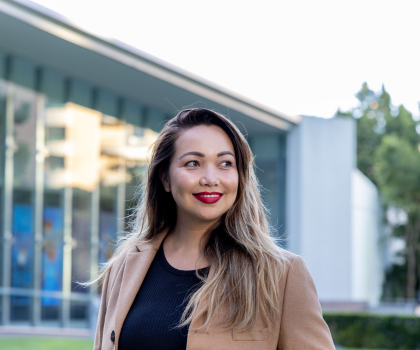
Rachell Hansen
Rachell is the Acting Manager of the Future Economy & Strategy Team in the Department of Resources (Queensland). In this interview, Rachell gives us an insight into her core business, her professional aspirations and her MBA experience.
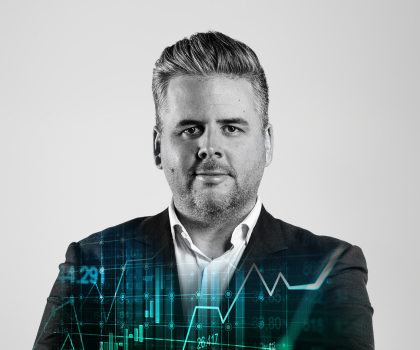
Jordan Walsh
Jordan completed his MBA while juggling a demanding career, family life, volunteering and taking part in the Global Business Challenge. How did he manage that balance, and what drew him to the Griffith MBA?
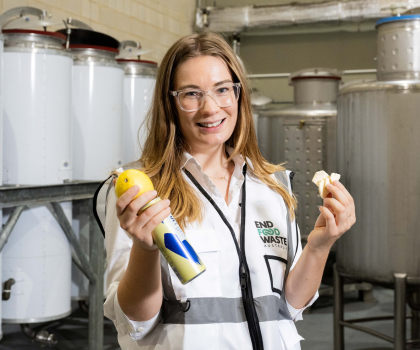
Francesca Goodman-Smith
Francesca is a sustainability leader working at the intersection of science, business and food waste reduction. In this interview, Francesca reflects on her journey from food waste research to leading a national research and development program, how the Griffith MBA has strengthened her leadership and strategic capabilities, and her advice for students looking to make a meaningful impact through their careers.