Gender Pay Gap
As a values-led organisation, Griffith is committed to ensuring that remuneration is fair and equitable for staff. We have several strategies in place to monitor and close the gender pay gap between women and men. Griffith’s gender pay gap data is published by WGEA in compliance with the Federal Government’s Workplace Gender Equality Amendment (Closing the Gender Pay Gap) Bill 2023.
Sustainable Development Goals
Griffith University is aligned to the United Nation's Sustainable Development Goals (SDGs) and is committed to promoting gender equality and reducing inequalities, working towards a world where everyone has equal opportunities, regardless of gender.
What is the gender pay gap?
Pay equity refers to equal pay for work of equal or comparable value. Equal pay is not only about wages, but also discretionary pay, allowances, bonus payments and superannuation, amongst other benefits. Unequal pay is just one of the many drivers of the gender pay gap.
The gender pay gap is a measure of how we value the contributions of all genders in the workforce.
WGEA calculates the gender pay gap as the difference between the average earnings of men and women, expressed as a percentage of men's average earnings. A positive value indicates pay gap in favour of men, while a negative value indicates pay gap in favour of women.
What is Griffith’s gender pay gap?
Griffith’s organisation-wide average gender pay gap on total remuneration for 2025 is 10.1% and the median is 6.8%. The average pay gap is much larger than the median pay gap, suggesting the average is influenced by a smaller proportion of larger values at the top end of the scale. Between 2021-2025, we have reduced the pay gap (noting some variation in between these years).
Gender pay gap metrics for Griffith University, 2021-2025
Calculation | 2021 | 2022 | 2023 | 2024 | 2025 |
Average (mean) total remuneration | 11.5% | 11.4% | 10.7% | 10.3% | 10.1% |
Median total remuneration | 8.7% | 7.0% | 5.6% | 6.1% | 6.8% |
Average (mean) base salary | 10.1% | 10.2% | 9.6% | 8.9% | 9.5% |
Median base salary | 6.4% | 5.3% | 3.9% | 4.2% | 4.5% |
As indicated in charts (Figure 1 & 2) to the right, one of the main reasons for the pay gap is because Griffith has a higher proportion of women in lower pay quartiles. This results in lower average earnings for women.
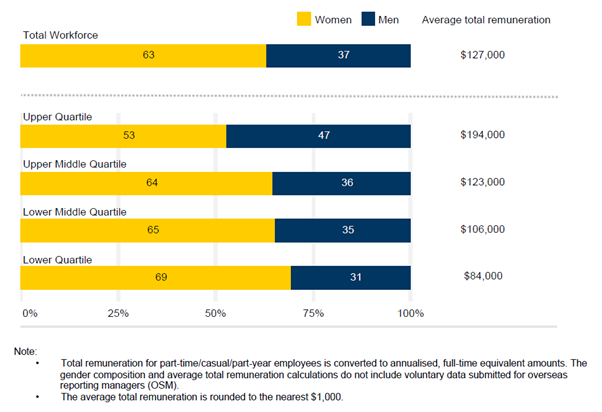
Figure 1. Griffith gender composition by pay quartile, 2024
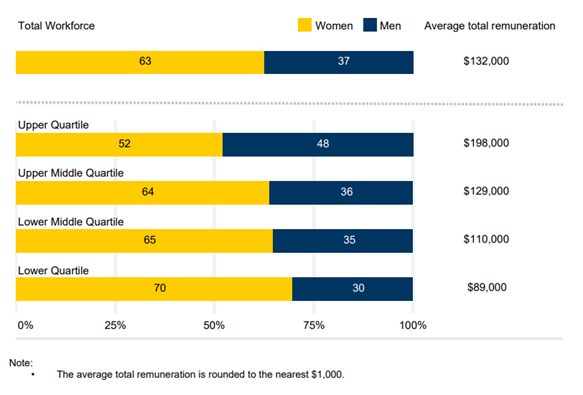
Figure 2. Griffith gender composition by pay quartile, 2025
What are the main drivers of the gender pay gap?
The high proportion of women in the lower pay quartiles is often related to the specific roles that women hold, and the remuneration associated with those roles. For example, there is a high proportion of women at lower HEW and academic levels and in professional and casual roles.
When we look at the gender pay gap at each salary grade, the pay gaps are much smaller. Most by-level pay gaps are below 2% and are generally explained by differences in pay increments. As a comparison, the difference between two increments within a scale is usually around 2-4%.
In the most recent reporting period, academic level C had a median total remuneration pay gap that was slightly larger (+2.7%) than other levels (A, B, C, & E all no gap). Some of the by-level pay gap can be explained by women being promoted to a new level or being appointed more recently than men on average, therefore being on a lower pay increment. Leadership is committed to monitoring and reducing this gap through senior remuneration and salary loading review processes.
How does Griffith compare to other organisations?
Benchmark data comparing Griffith to other Higher Education institutions of a similar size shows that we perform:
- 2% higher (worse) on average total renumeration
- 1.5% higher (worse) on median total renumeration
- 1% higher (worse) on average base salary
- 1.4% lower (better) on median base salary
Griffith has a slightly higher proportion of women in the lower pay quartiles and in the institution overall than other Higher Education institutions, which contributes to these differences.
What is Griffith doing to address the gender pay gap?
While we have seen progress on the pay gap over the past few years, we continue to work towards improving the gender pay gap and gender equity at the University.
Griffith regularly monitors the gender pay gap to identify opportunities to remedy these gaps. Our work to support the progression of women into higher level roles and workplace flexibility also contributes to reducing the gap.
Pay scale transparency
Salary ranges for professional (HEW) and academic level roles under the Enterprise Agreements are available publicly on the Leave and Benefits webpage. Staff also receive an annual salary increment until they reach the top of their relevant pay scale unless their performance is deemed unsatisfactory. These practises reduce the opportunity for discrepancies in pay.
Monitoring and remedying gender pay gaps
Griffith reports to the Executive Group and Council annually on the gender pay gap. In 2024 this was via the Quarterly Workforce Report and included a whole of organisation and by-level gap analysis.
Since 2019, we have monitored pay gap data during our senior remuneration and salary loading processes. Senior leadership has used this data to address the pay gap in senior roles, which has resulted in closing and reducing the gap in many areas. Leadership also considered the gender balance of staff who received salary loadings to ensure women are well represented in this cohort.
We also undergo deeper analyses to understand and respond to the root cause of larger by-level and like-for-like pay gaps as needed.
Supporting career progression for women
Griffith has a range of initiatives to support the progression of women into more senior roles and has set a target of 50% women at senior academic and professional levels to drive progress in this area. In 2025, for example we are sponsoring positions in the WATTLE Women’s (Academic) Leadership Program and have sponsored the Women in Technology (WiT) Culturally and Linguistically Diverse (CALD) Program.
We continue to work towards gender equity, diversity and inclusion through our commitment to SAGE and Athena Swan. Griffith has been recognised with four SAGE Cygnet Awards for our progress on:
- improving the representation of women in STEM disciplines, which included work towards increasing women in senior roles in this area;
- Workplace flexibility and career breaks;
- LGBTIQ+ inclusion; and
- First Peoples employment.
You can find out more about our initiatives to support women on the Gender Equity website.
Workplace flexibility
Griffith offers a range of workplace flexibility options to support working parents and other commitments that may impact a staff member’s career trajectory. These offerings are articulated in our Enterprise Agreements and include pro-rata paid parental leave, the Flexible Work Year, reversible part-time options for carers and a range of other inclusive leave options. Griffith also provides parenting facilities, an onsite childcare centre at Nathan campus and a Flexible Work policy that supports a hybrid work from home and office arrangements.
More information can be found on our Workplace Flexibility webpage.
Annual compliance reporting
In accordance with the requirements of the Workplace Gender Equality Act 2012 (Act), Griffith University lodged its annual public report with the Workplace Gender Equality Agency (WGEA) on May 26, 2025. To access a copy of the report, please click on the links on the right. From 2024, Griffith’s gender pay gap data is published by WGEA in compliance with the Federal Government’s Workplace Gender Equality Amendment (Closing the Gender Pay Gap) Bill 2023.
Griffith staff may make comments on the report to Marnie King, Senior Lead (Inclusion and Development) or to the Agency.
WGEA reports
- 2024 Public Report - Questionnaire, Griffith University
- 2024 Public Report - Workplace Profile Corporate group 1, Griffith University
- 2024 Public Report - Workplace Profile Corporate group 2, Griffith University
- 2025 Public Report - Questionnaire, Griffith University
- 2025 Public Report - Employee data tables, Griffith University
WGEA Compliance Letter
Further context on the data published by WGEA
In the WGEA Data Explorer for 2024, you may notice that our paid Parental leave entitlement looks lower than the sector. This is because WGEA asked for the minimum number of weeks of paid parental leave that is available to staff. At Griffith, we offer pro-rata leave for under 12 months of service, therefore this number is not reflective of what most staff would be entitled to (up to 26 weeks).
There is also not a common approach across the sector on how HEW and academic levels translate into WGEA manager and non-manager categories, so comparisons between institutions on these categories should be treated with caution.
Find out more
WGEA provides a range of resources to explain the gender pay gap and actions that can be taken by organisations and leaders to close this gap.