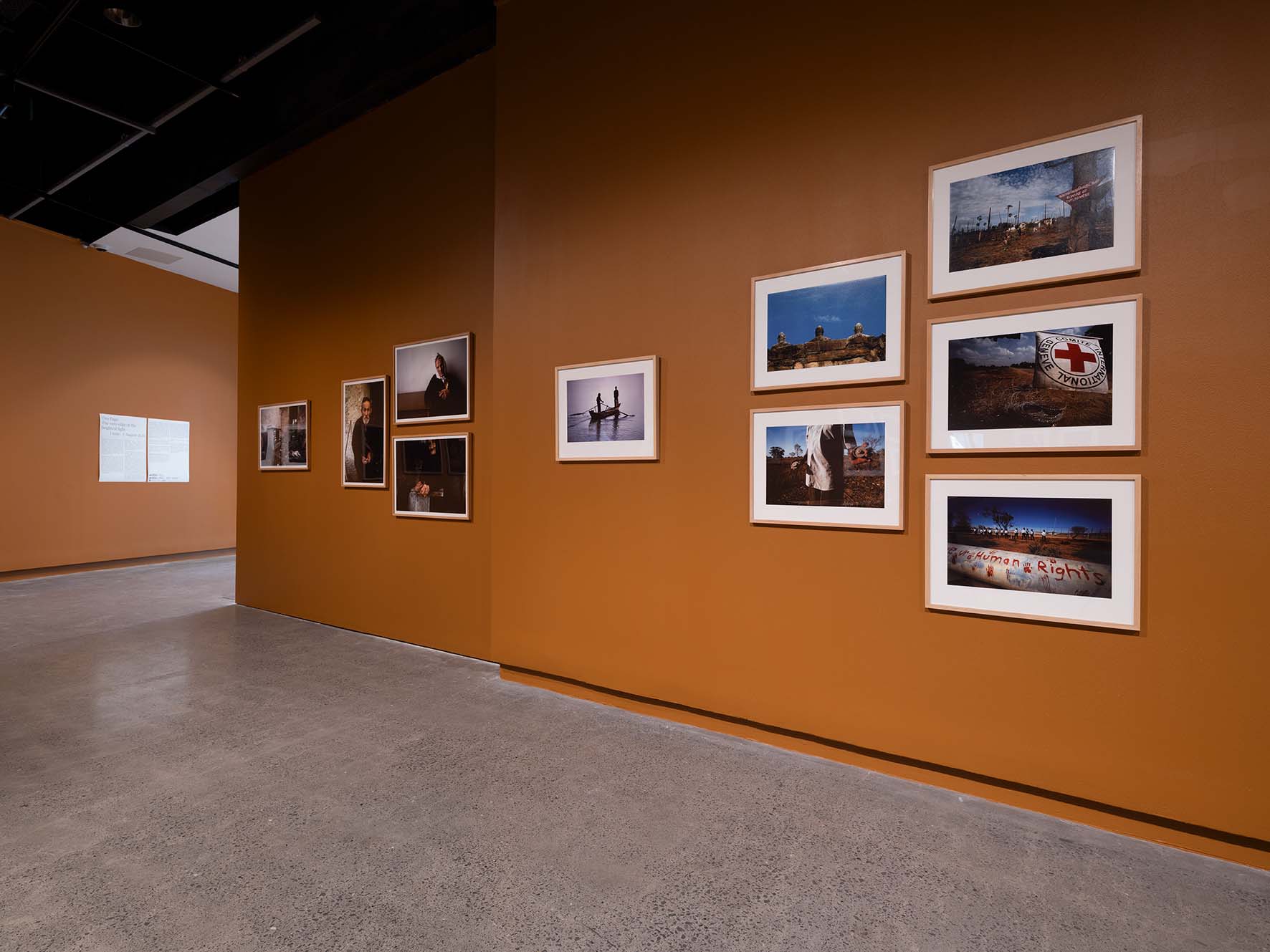
Image: Tim Page OAM, Banteay Mien Rith During UNTAC Elections, 1993, C-type photograph on Fujiflex paper, 119.8 x 171.4cm. Griffith University Art Collection. Donated through the Australian Government's Cultural Gifts Program by the artist, 2006. Courtesy the Estate of the Artist.
1 June – 1 August 2026
There is a quote stencilled on the exterior of the shipping container Tim Page OAM (1944-2022) used as his office on the sprawling property on the mid-north coast of New South Wales – “any good war picture is an anti-war picture”. It is a sentiment Page repeated regularly throughout his career – though regarded as one of the greatest war photographers of the 20th century, he was a dedicated antiwar campaigner who used both his photography and writings to be a strong voice for peace.
Self-taught, Page became a photojournalist almost by accident when he left his family home in Kent, England aged 17 and headed overland across Europe to Southeast Asia, where his travels were halted by the Laotian Civil War. The photographs he took with a borrowed camera were some of the few taken of that long conflict and quickly led to United Press International sending him to Vietnam, where he was one of the first photographers on the ground as hostilities dramatically escalated. There he documented not only conflict but the jarring reality of ordinary life that continued despite the chaos, and in the process became one of the most vivid personalities among a group of war photographers whose images helped shape international public opinion and policy regarding the Vietnam War.
Page had an extreme commitment to covering dangerous situations and was wounded four times, the most serious requiring extensive neurosurgery and seven months of rehabilitation, and partly inspired the photojournalist played by Dennis Hopper in Francis Ford Coppola’s Apocalypse Now. Post-recovery, he worked as a gonzo photojournalist covering the drug-fuelled world of rock, hippies and veterans for magazines such as Rolling Stone, and devoted significant time to projects that ‘gave back’ to the people of Vietnam, such as establishing the Indochina Media Memorial Foundation (IMMF), campaigning on behalf of children deformed by Agent Orange, and, inspired by the disappearance and presumed death of his close friend Sean Flynn, began compiling an archive of works by photographers on both sides killed during the First and Second Indochina wars. The last culminated in the book Requiem and exhibition of the same name which was held at Griffith University Art Museum in 2003 as part of a global tour.
In the early 2000s Page based himself near Brisbane and was appointed an Adjunct Professor in Photojournalism at the Queensland College of Art & Design, Griffith University. He covered uprisings in the Asia Pacific and, on behalf of the University’s Institute for Ethics, Law, Justice and Governance, travelled to the Solomon Islands alongside journalist Mark Dodd to document the Australian Defence Force’s Regional Assistance Mission ‘Operation Anode’. In 2009 he served as the United Nation’s Photographic Peace Ambassador in Afghanistan, a title created especially for him.
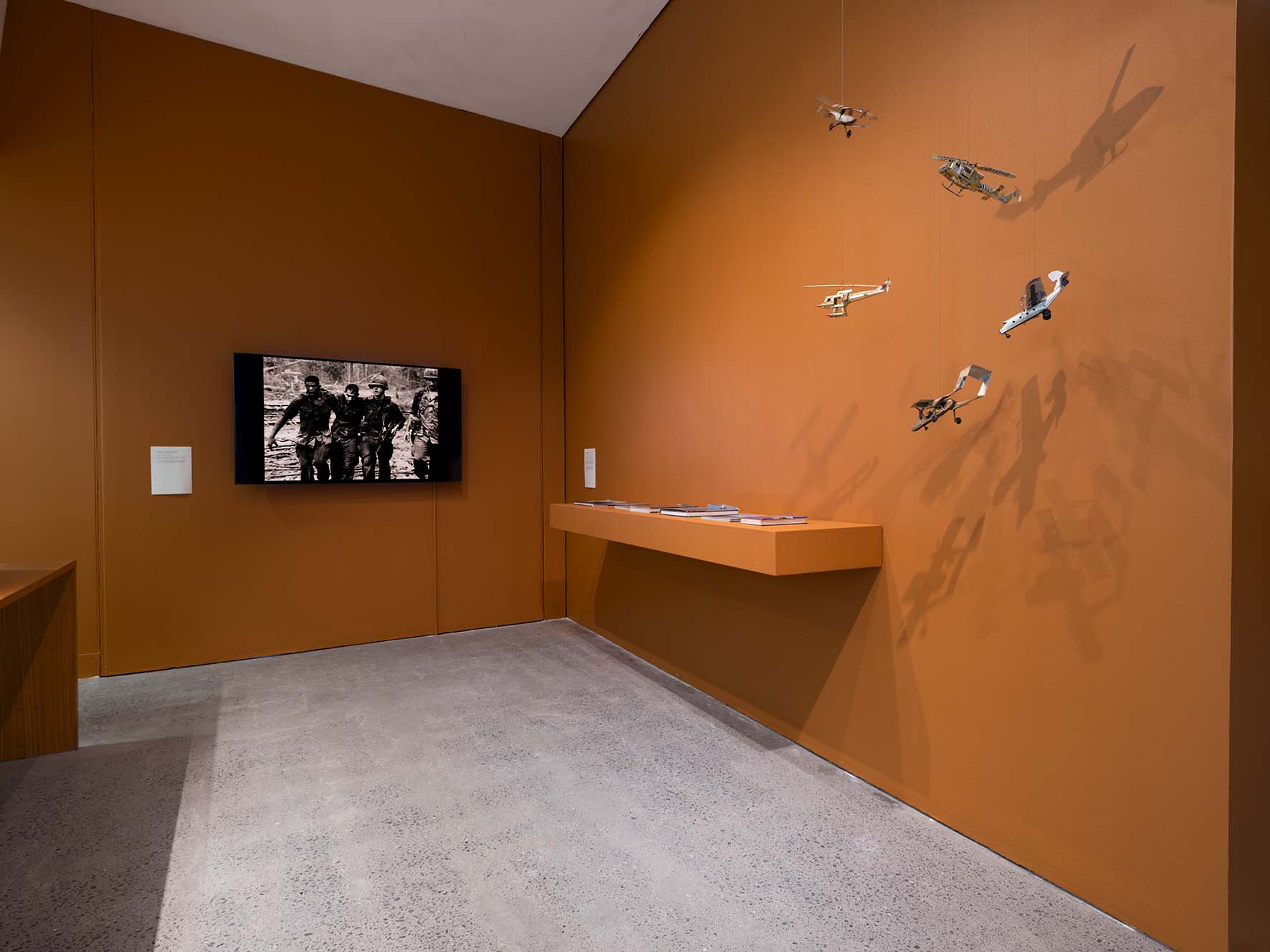
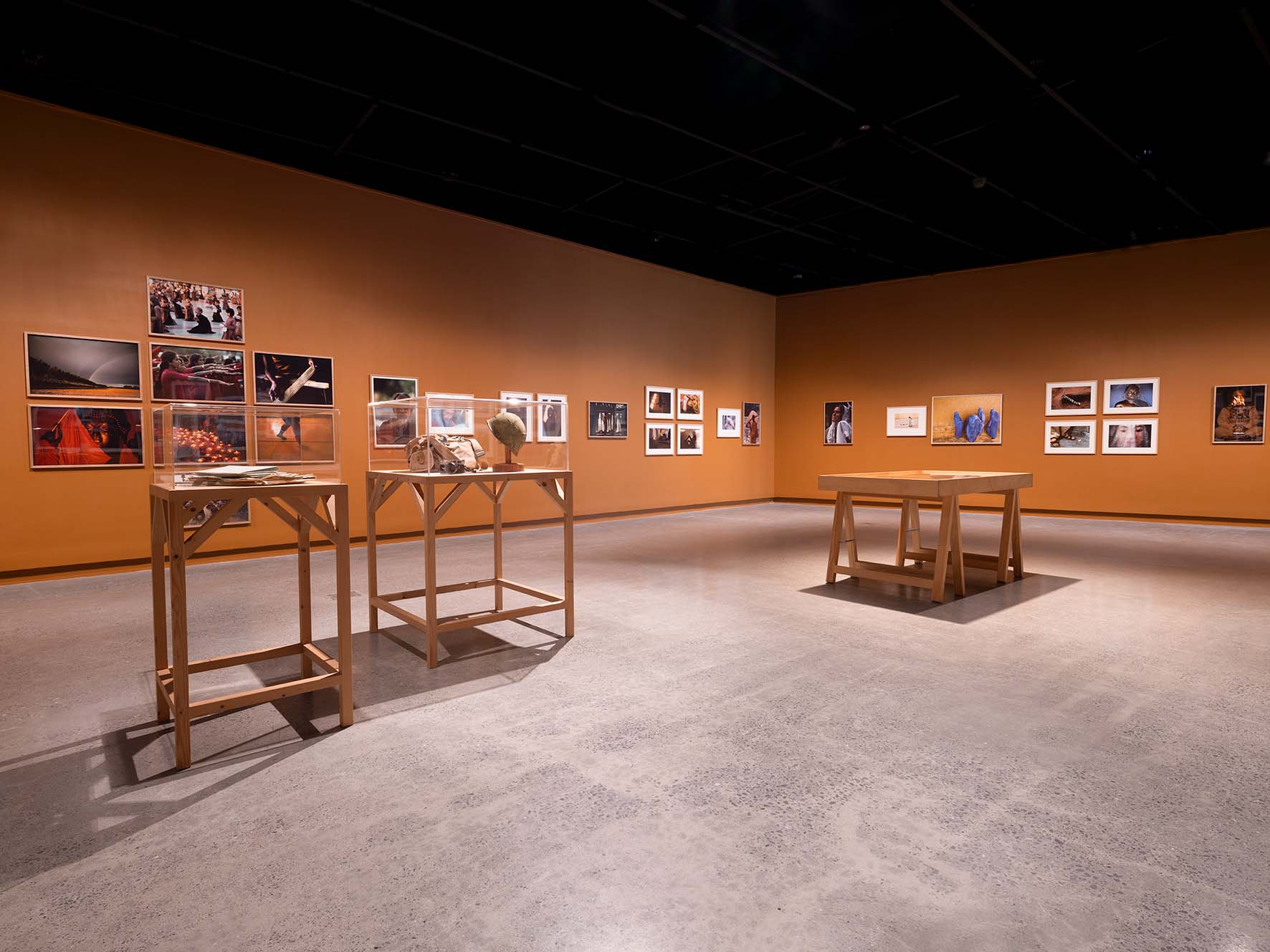
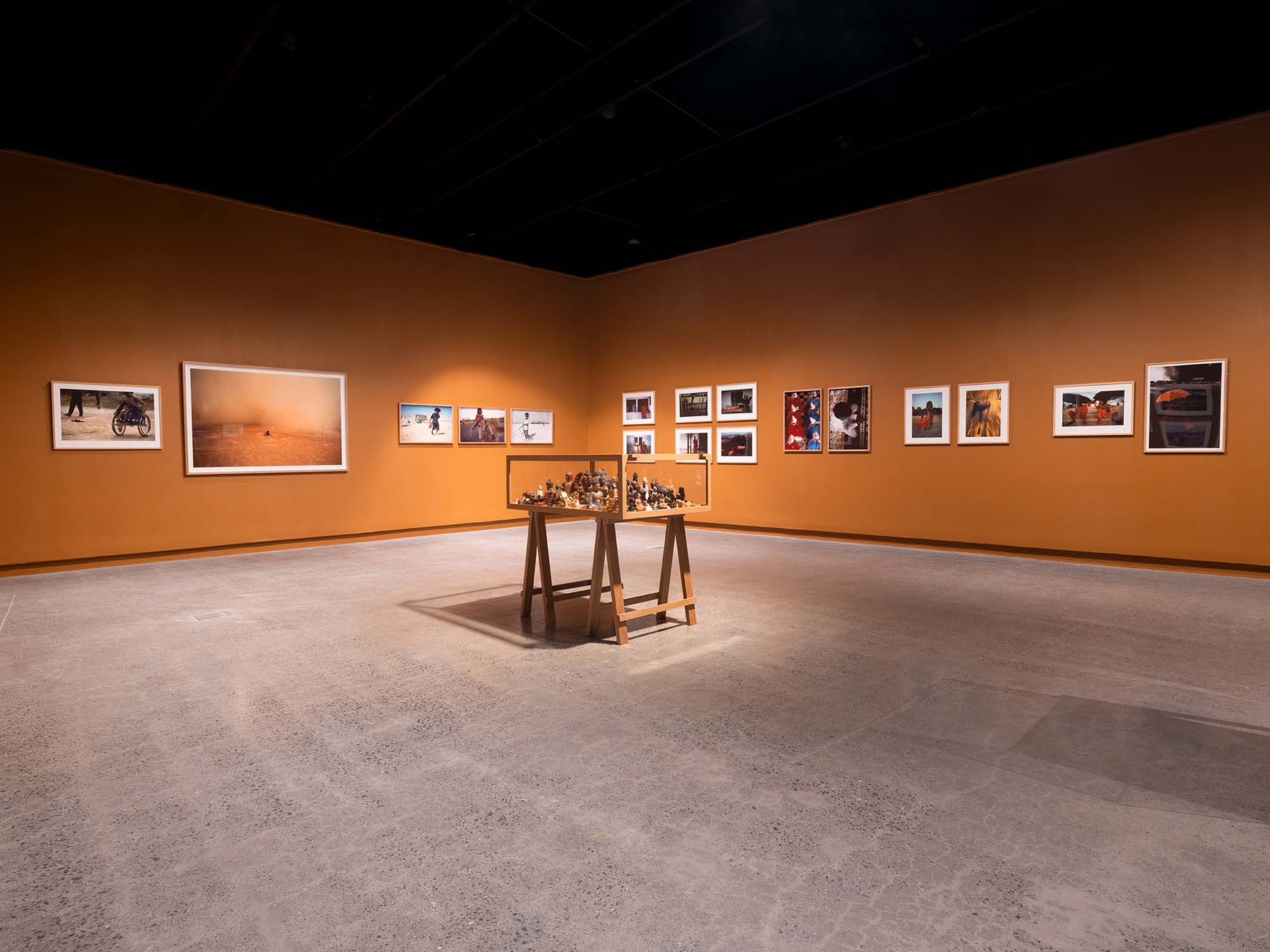
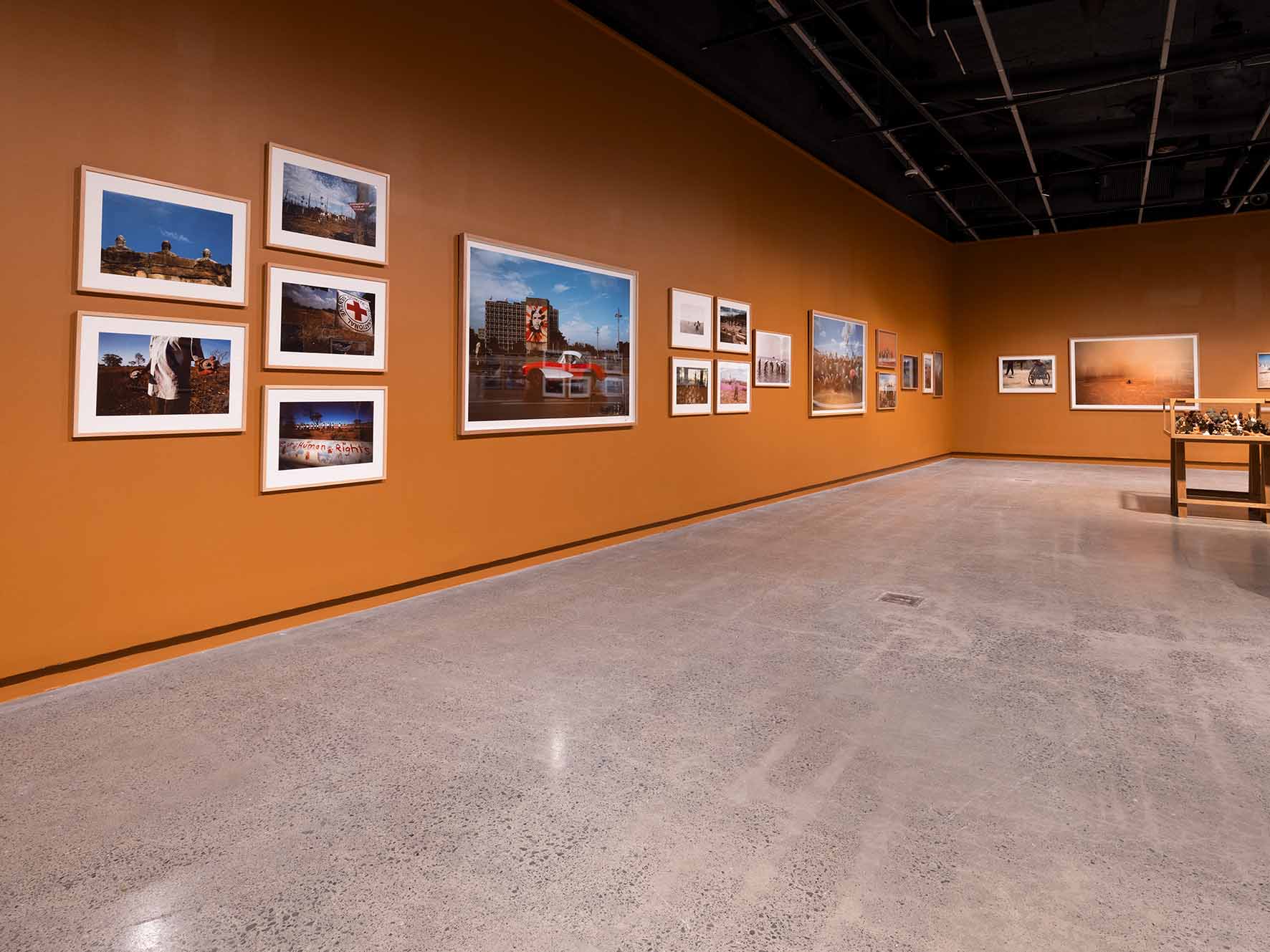
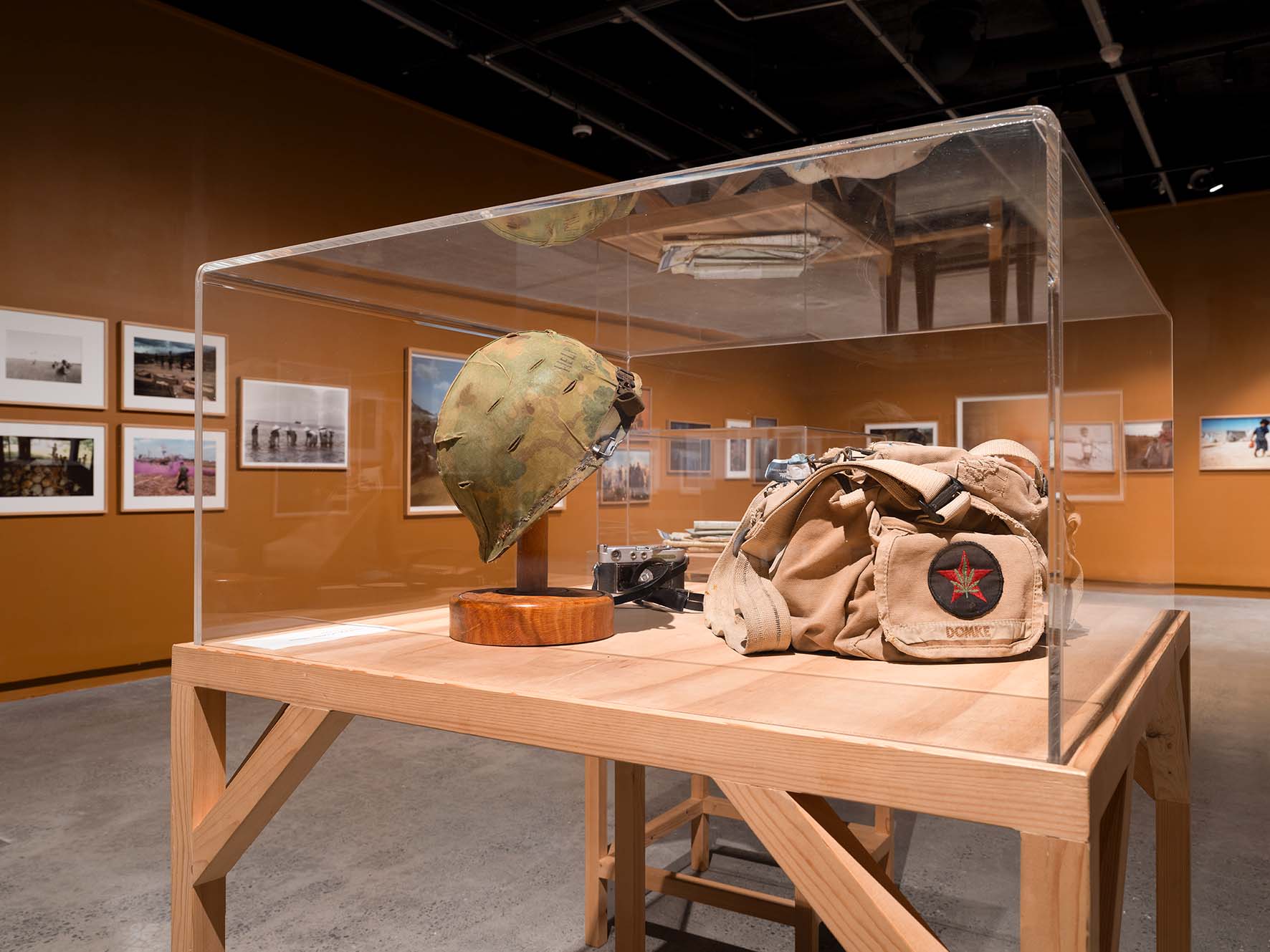
In 2012, Page donated a large portion of his archive to the Griffith University Art Collection to be used as an ongoing resource for students, staff and researchers. Tim Page: The very edge of the brightest light comprises almost 70 works from this donation, as well as ephemera and objects on loan from Page’s long term partner Marianne Harris, to offer a new perspective on his oeuvre.
Though Page’s pervading legacy continues to focus primarily on his work during the Vietnam War, his career spanned more than 50 years, during which time he produced over a dozen publications and tens of thousands of photographs. He had an instinctive understanding of the formal rules of photography and a skilled eye for colour, light and composition, and embraced narrative to convey his intent. Tim Page: The very edge of the brightest light includes several of his iconic war photographs but also focuses on his work from the 1980s-2000s when Page returned regularly to the locations of his past assignments to highlight the people and places left victim to manmade disasters and emphasise the futility of war. The images taken during this time are some of the most compelling and empathetic of Page’s career. Where available, they are accompanied in this exhibition by his original notes, denoted by the initials ‘TP’ in the caption.
As Dr Miriam Deprez writes in a new essay published for this exhibition:
“Page’s photographs remind us that in an age of visual excess, we still urgently need photography. Not because photographs resolve the violence, but because they ask us to remain with it. And now more than ever, we need to learn how to look with, rather than simply look at.”
Curators: Carrie McCarthy and Dr Amy Carkeek.
Tim Page: The very edge of the brightest light is presented in partnership with Griffith University’s Queensland College of Art & Design, the School of Humanities, Languages and Social Sciences, and the Disrupting Violence Beacon. Special thanks to Dr Samid Suliman, Dr Carl Warner, Dr Miriam De Prez and Dr Kasun Ubayasiri.
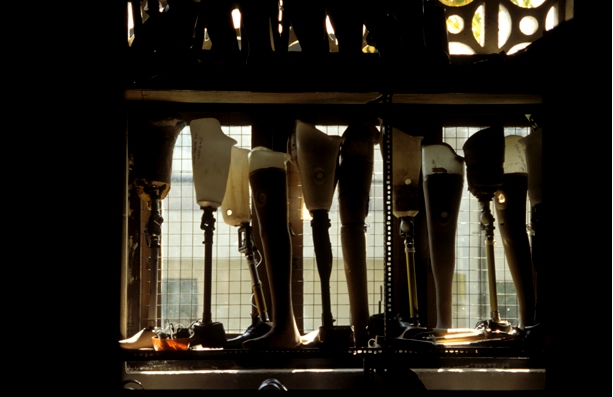
Image: Tim Page OAM, Obsolete Prosthetics, 2002, C-type photograph on Fujiflex paper, 50.8 x 76cm. Griffith University Art Collection. Donated through the Australian Government's Cultural Gifts Program by the artist, 2006. Courtesy the Estate of the Artist
The Fear That We Will All Forget | Photojournalism Symposium
To celebrate the final weekend of Tim Page: The very edge of the brightest light, join us for a series of conversations with leading voices in photojournalism and visual politics, including multi award-winning photographer and filmmaker Barat Ali Batoor, Marianne Harris, Page's long-time partner and manager, and Griffith University academics Dr Chari Larsson, Dr Miriam Deprez and Dr Samid Suliman.
When: Sunday 2nd August, 10:00am - 1:30pm
Where: Griffith University Art Museum, 226 Grey Street, South Bank QLD 4101
Cost: General $20.00 incl. morning tea // QCAD Students $10.00 with current student email
Opening Event | 'Tim Page: The very edge of the brightest light'
When: Thursday 4th June, 6:00pm
Where: Griffith University Art Museum, 226 Grey Street, South Bank QLD 4101

Installation images