Ah, the joys of gardening in the subtropics: heavy clay soil, high humidity, blazing heat and rampant lawn grubs. But what if you could have a beautiful garden with far less effort?
No, really. How? Professor Catherine Pickering – otherwise known as the ‘plant whisperer’ – says it’s all about picking local plants that can take everything – everything – that’s thrown at them. “Local plants do well as they are already adapted to our soils and climate,” she says. “They give gardens a real sense of place, with shapes, colours and textures reflecting local environments, from the beaches to the rainforests.”
Here, Catherine picks seven hardy natives guaranteed to flourish in South East Queensland.
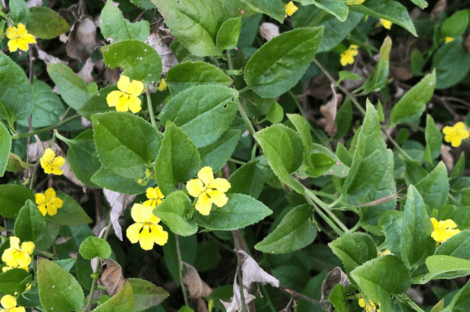
1. Hop Goodenia (Goodenia ovata)
“This is a tough, fast-growing ground cover,” says Catherine. Spreading to three metres wide, it is salt-tolerant, low-maintenance and responds well to pruning. Ideal for borders, hedges, pots or hanging baskets, its bright yellow flowers attract butterflies and bees.
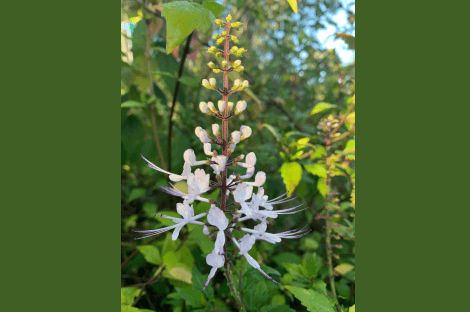
2. Cat’s Whiskers (Orthosiphon aristatus)
Perfect for cottage-style gardens, this fast-growing shrub features soft dark green leaves and striking white-to-purple flower spikes, with long stamen that look like… well, cat’s whiskers. Growing to around a metre high and wide, it thrives in moist, well-drained soil with partial shade, and can be easily pruned to shape.
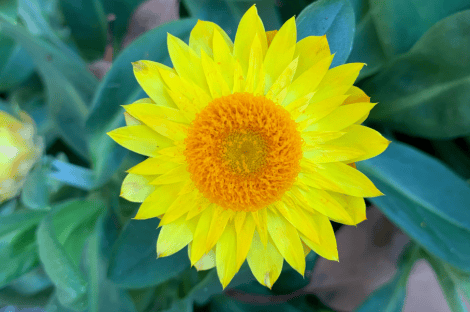
3. Golden Everlasting (Xerochrysum bracteatum)
A garden favourite, this compact perennial produces clusters of flowers surrounded by papery brackets in a range of colours. Growing to around 1.2 metres, it performs best in full sun and is both heat- and drought-tolerant. “The heads can be collected and used as dry flowers adding to its appeal," says Catherine.
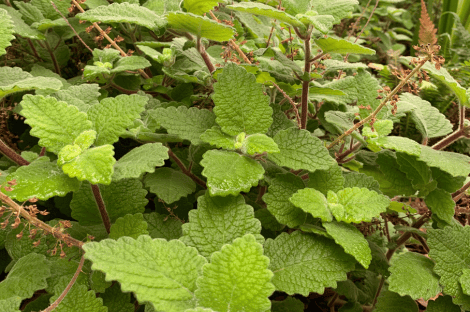
4. Native Coleus (Coleus graveolens)
“If you want to support native bees in your garden, this is the plant for you,” Catherine says. This very easy to grow aromatic plant is an excellent filler for garden gaps and can be easily propagated from cuttings. The spikes of small purple/blue flowers are produced year-round, and at Griffith, Native Coleus are grown near native bee hives.
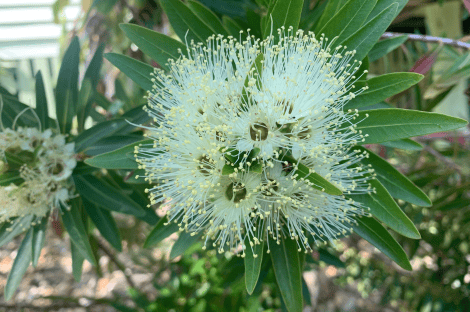
5. Little Penda (Xanthostemon verticillatus)
Although native to North Queensland, this resilient shrub is increasingly popular in South East Queensland gardens. Its large clusters of bright yellow flowers are produced for most of the year and attract bees, butterflies and birds. It can also be used as a hedge, growing anywhere from small and compact to around four metres high with glossy green leaves.
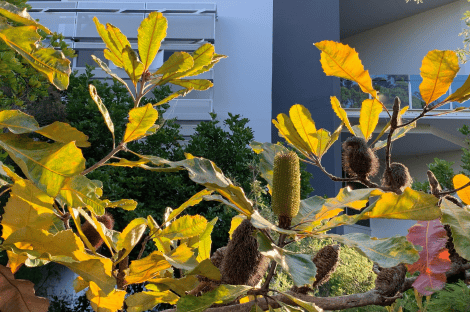
6. Swamp Banksia (Banksia robur)
“Before development, the swamps behind the dunes along much of the coast of South East Queensland were full of this and other Banksia,” says Catherine. Growing up to 2.5 metres high and wide, this shrub with large tough leaves gives a lovely architectural feel to gardens, while its vivid green-to-yellow flowering spikes are popular with honeyeaters and parrots.
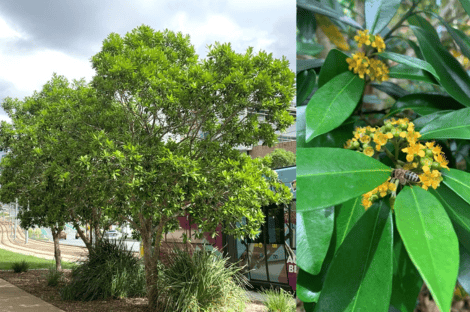
7. Water Gum (Tristaniopsis laurina)
“This is a beautifully structured tree with yellow flowers and a generous canopy,” Catherine says. Trees, she points out, are vital to our cities and towns. In fact, a key principle in urban design is that everyone should be able to see at least three trees from their home. Water Gum is a beautiful urban tree with lovely yellow-grey bark and glossy leaves that does well in a garden or street setting.
Professor Catherine Pickering is a prolific researcher on human nature interactions, from community gardens to national parks. She teaches Botany and Urban Ecology, chairs the Griffith Biodiversity Working Group and champions biodiversity across Griffith’s campuses and on social media.
Where to buy your plants
Inspired to don your gardening gloves? Rather than large commercial garden centres, Catherine recommends sourcing native plants, including tube stock, from local nurseries and community organisations such as Native Plants Queensland and Friends of Botanic Gardens.
Image captions (top to bottom):
- Professor Catherine Pickering with the endangered Phaius australis (southern swamp orchid), Australia’s largest terrestrial orchid, captured just outside the Gold Coast campus library in September, when hundreds of these remarkable flowers bloom. One of 23 threatened plant species found across the campus.
Published 30 April 2026
These plants don’t just thrive at home—they’re shaping Griffith’s campuses too.

Sustainable Development Goals
Griffith University is aligned with the United Nation’s Sustainable Development Goals (SDGs) and is committed to taking action on climate change and preserving terrestrial ecosystems, working toward a more sustainable and biodiverse planet for the benefit of all.
Explore more from the newsletter
Stay connected
Keep in touch with your alumni community.